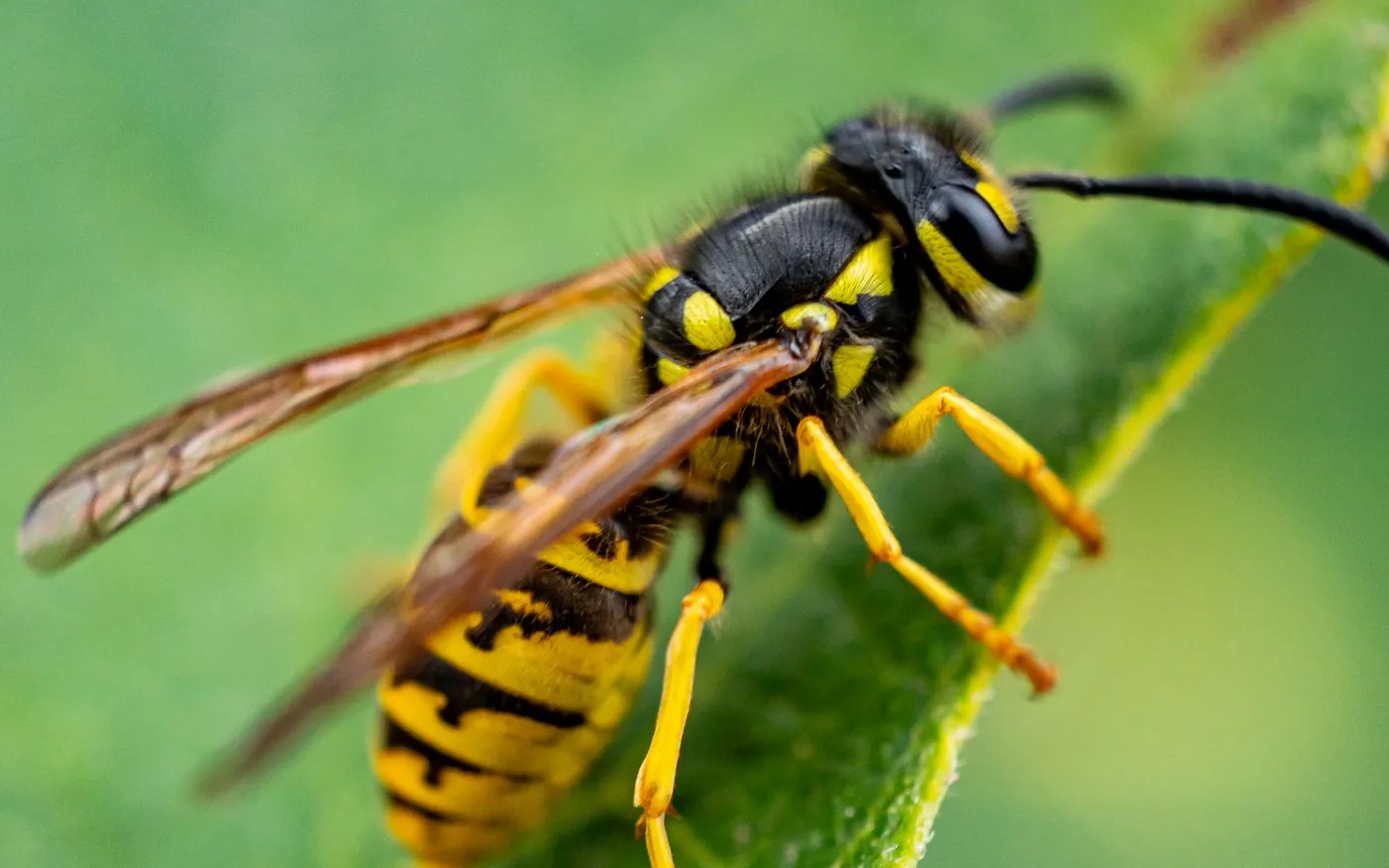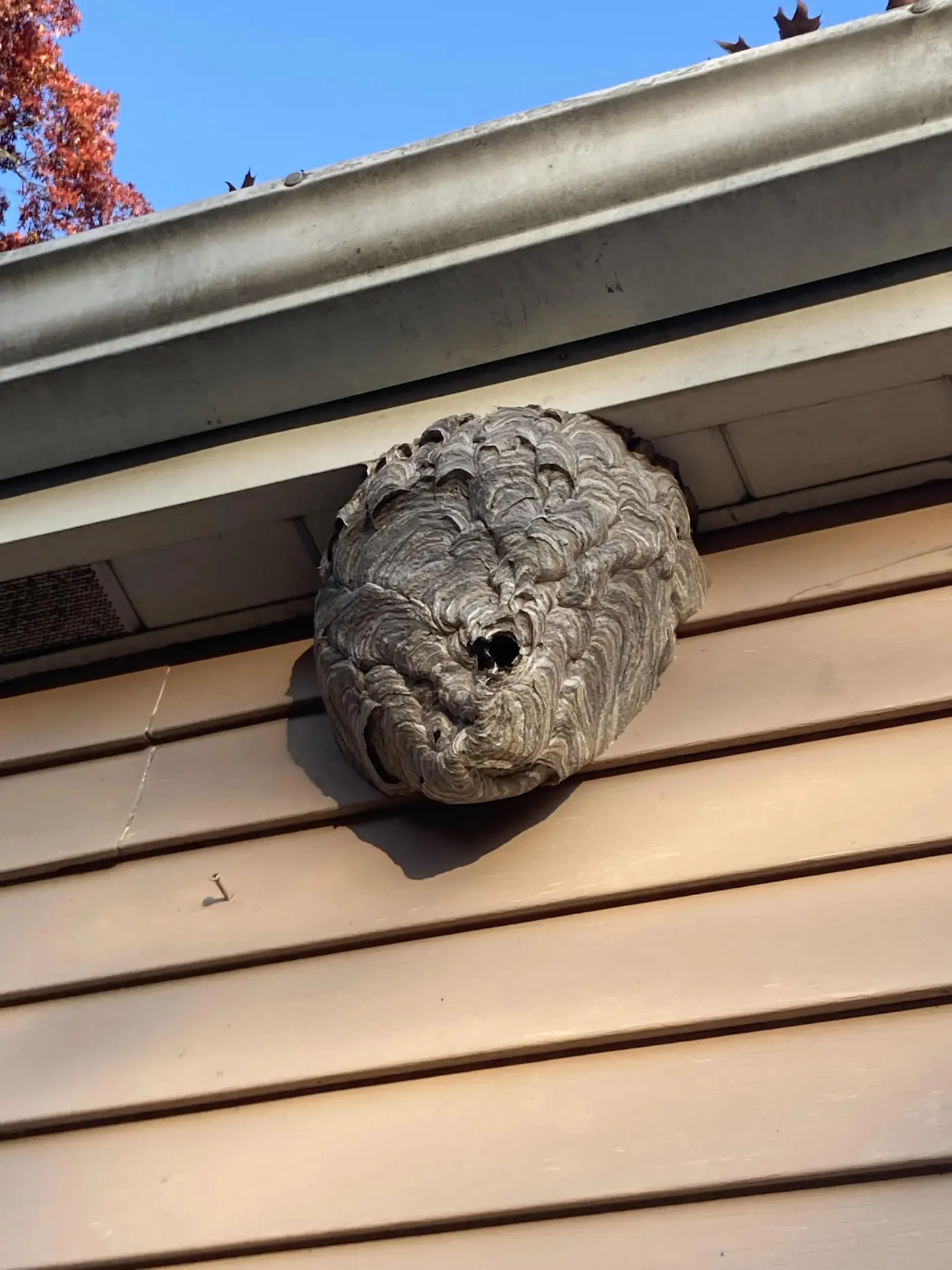
By late fall, most of the buzzing around Portland houses stops. Yellowjacket and paper wasp colonies die off after the first hard freeze, and the nests go quiet. If you had honey bees in the wall this summer, it is natural to assume they are gone too.
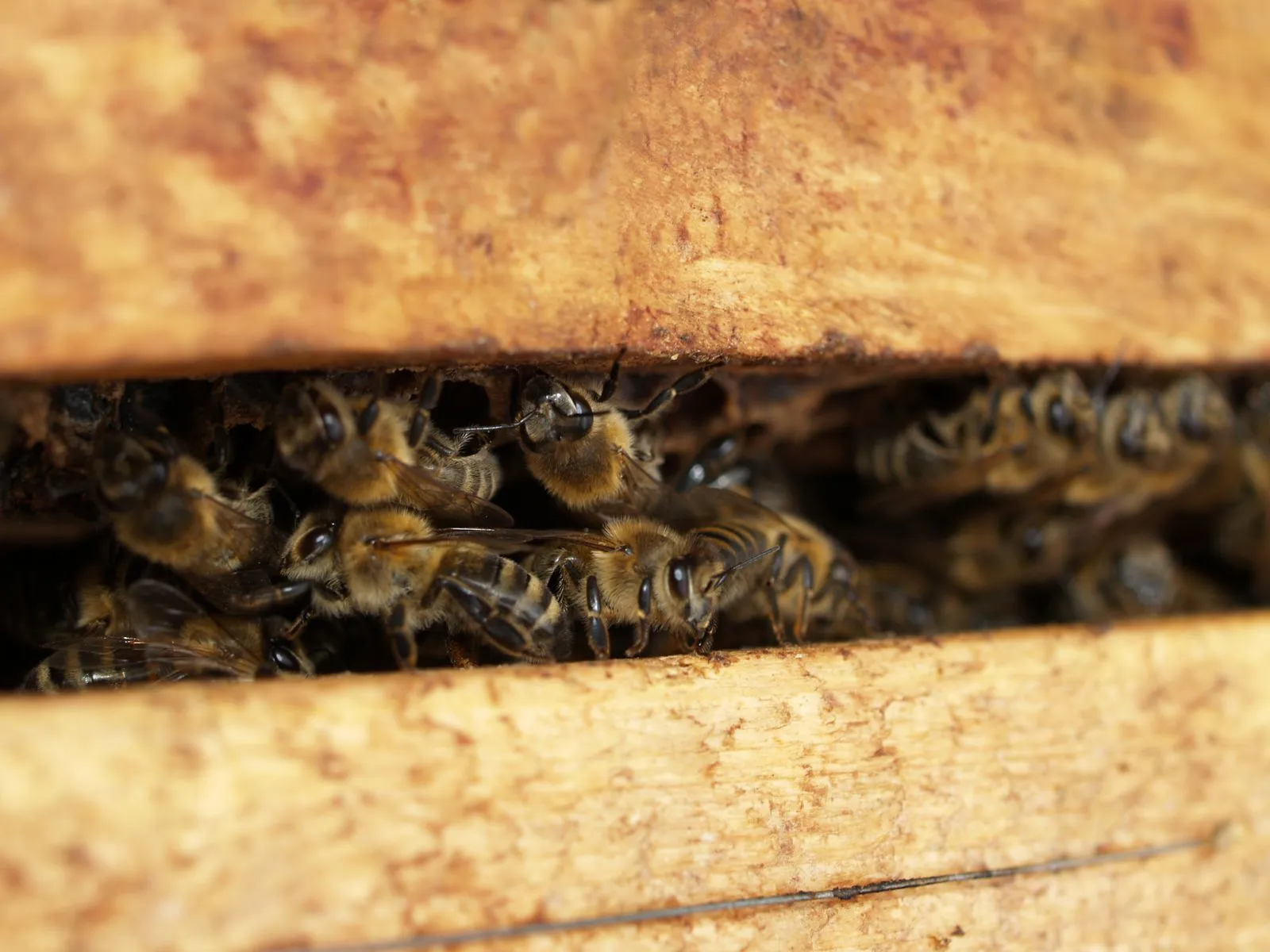
If they were honey bees, they almost certainly are not. A honey bee colony does not die off in fall. It settles in for the winter, inside your wall, on the honey it spent all summer storing.
Honey Bees Do Not Die Off Like Wasps
A wasp colony is built for one season. Only the new queens survive, and each one starts over in spring. That is why a late October yellowjacket nest is on its way out.
Honey bees work differently. The whole colony survives the winter together, clustering tightly to keep the queen and each other warm and living on stored honey. Oregon State University’s pollination podcast covers how honey bees survive the winter in detail. For a homeowner, the short version is this: a colony that moved into your wall in spring is still in there in January.
Signs the Honey Bees in the Wall Are Still Alive
You will not see the summer traffic, but there are clues:
- Bees at the entrance on mild, sunny days. Honey bees leave the cluster to fly when it warms up, even in winter.
- A low hum when you put your ear to the wall on a cold day.
- A few dead bees on the ground below the entrance, which is normal for a living colony.
If you are not sure whether the bees were honey bees in the first place, a photo of the entrance usually settles it. Fuzzy, golden-brown bees streaming into one gap is the classic sign.
Why Spraying the Wall Makes It Worse
Spraying a colony inside a wall kills the bees and leaves everything else behind: the comb, the wax and the honey. Without the bees to manage it, the honey and wax can soften and run, and it can come through the drywall as a stain that bleeds through paint.
Then other insects show up for the leftovers. Ants follow the sugar, wax moths work through the old comb, and next summer yellowjackets come to rob what remains. That is why the comb has to come out with the bees. The honey bee removal and relocation page explains how a wall colony is taken out with its comb.
What to Do Over the Winter
- Do not plug the entrance. Bees sealed inside a wall look for another way out, and that can be into the house.
- Do not spray. It turns a bee problem into a honey and comb problem.
- Take a photo or a short video of the entrance on a mild day, with the wider wall in frame.
- Note where the bees go in, whether it is a soffit vent, a gap in the siding or a chimney, and anything you have seen inside.
Then send that photo or video. Whether it makes sense to open the wall now or plan for warmer weather depends on the colony and where it is, and that is easier to judge from a picture.
Bees You Do Not Need to Worry About in Winter
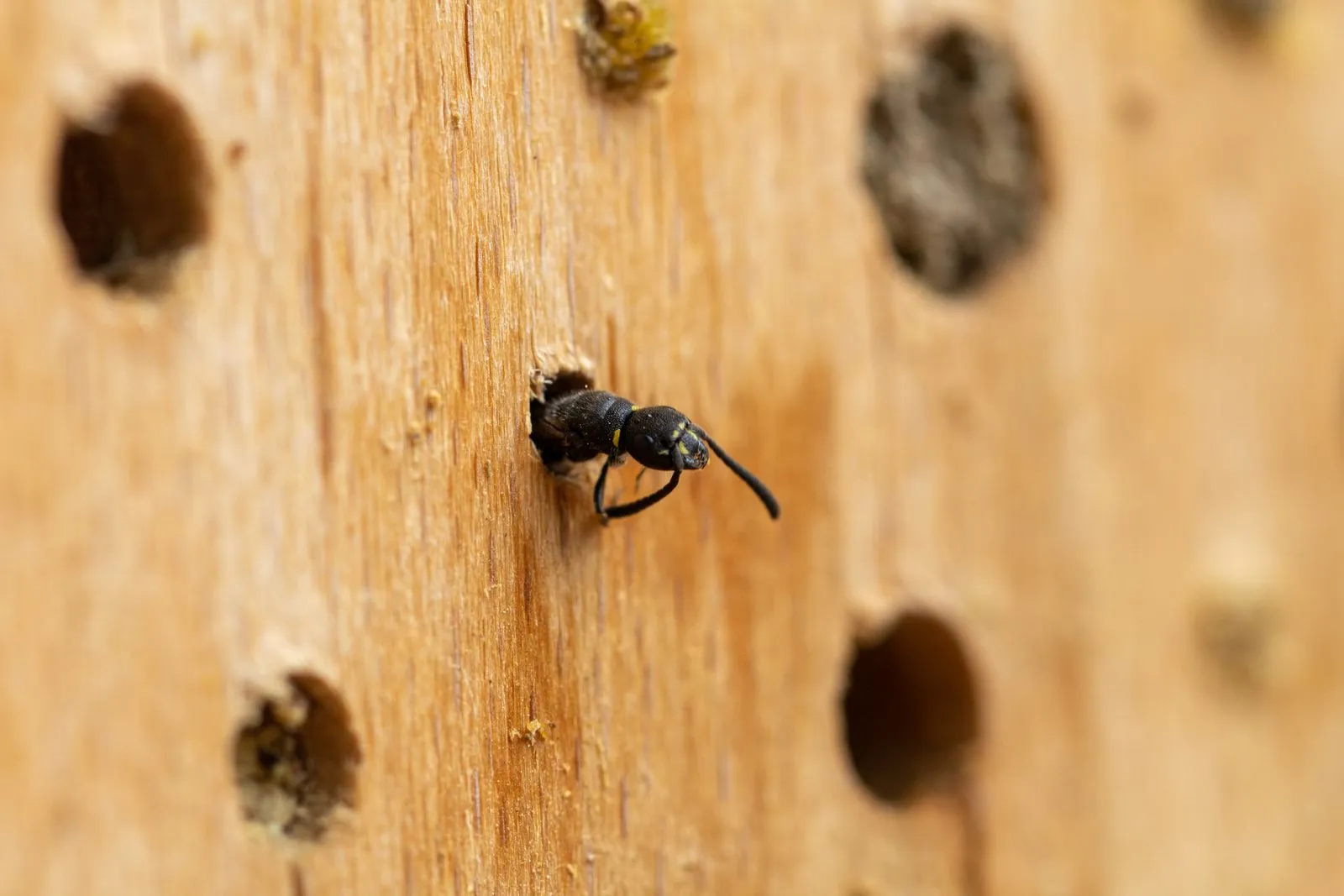
Not every bee problem carries through the cold months. Bumble bee colonies die off in fall, much like wasps, so a ground nest from last summer usually needs nothing. Carpenter bees rest in their tunnels until spring, and there are a few winter jobs for carpenter bee holes worth doing in the meantime.
A honey bee colony is the one that does not go away on its own. If it is in your wall, it is still there, and the sooner it is planned for, the less honey and comb there is to deal with.