
Carpenter Bee Control
Carpenter Bee Removal in Portland, Oregon for Decks, Fences, and Eaves
Carpenter bees drill clean round holes into bare wood and go a little deeper every spring. I find the active tunnels, treat them, and show you how to close them for good.
- Same-day service available
- Licensed Commercial Pesticide Operator
- Quoted before any work begins
What carpenter bee removal in Portland, Oregon actually involves
Carpenter bee work is repair work with a bee attached. Almost nobody gets stung. What you get is a deck rail, fence, or run of eaves drilled a little deeper every spring, plus woodpeckers tearing the tunnels open to reach the larvae. The order matters: I treat the active tunnel first, then you seal it, then you paint. I quote before I start, so the price is settled before anything gets touched.
- Treat the tunnel, then seal it, then paint. In that order the wood stays sound.
- The male hovers at your face and has no stinger. The female can sting and almost never does.
- Ragged, torn open holes are woodpecker work, not bee work.
- Same-day carpenter bee service across the Portland metro when my schedule allows.
Carpenter bee damage is a building problem wearing a stinging insect costume
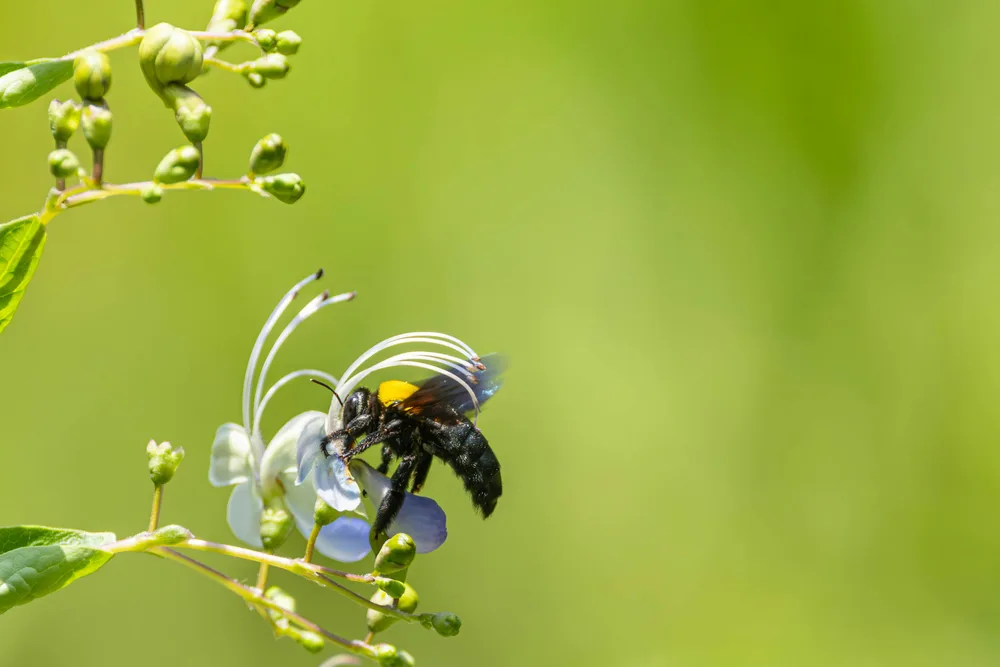
Carpenter bees don't eat wood. People here call them wood bees, which makes it sound like they're chewing through the house for food, but they're building a nursery. A female picks bare, weathered, unpainted wood, drills a round entrance about half an inch across, makes a sharp turn, and runs a tunnel along the grain. She packs it with pollen and lays eggs in a row of cells.
One tunnel in a fence rail isn't a crisis. The trouble is that carpenter bees reuse and extend the same wood year after year. Her daughters come back to the tunnel they hatched in and go further. Give a sun facing deck rail a few seasons and you get a network of galleries inside a board that still looks fine from the outside.
Then the woodpeckers arrive. They hear the larvae and open the tunnels with their beaks, which turns a tidy half inch hole into a long torn gash. Water gets in, and wet wood is soft wood, which is what the next female is shopping for. That loop is why I treat carpenter bees differently from the rest of my bee removal work in Portland.
Telling a carpenter bee from a bumble bee before you spend a dollar
These two get mixed up constantly, and it matters. One is drilling your deck. The other is a ground colony that's gone on its own by fall.
The shiny black abdomen is the tell
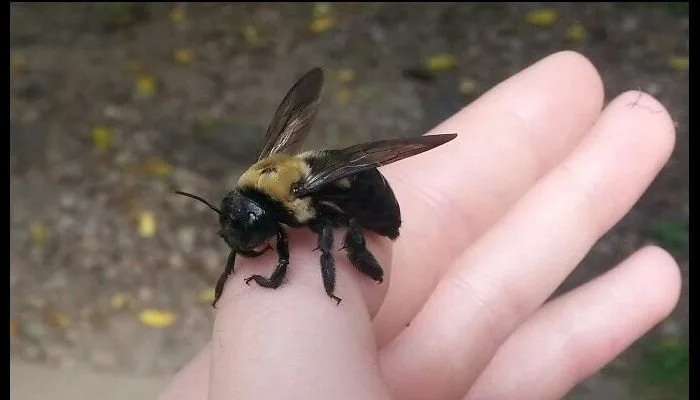
A carpenter bee's abdomen is smooth, hairless, and glossy black, like it's been polished. Around Portland the female, the one actually drilling your wood, is black all over. Only the male carries any yellow, and it's on his face and the front of his thorax, so don't wait to see yellow before you call it. If the back half shines, it's a carpenter bee.
Fuzzy all the way back means bumble bee
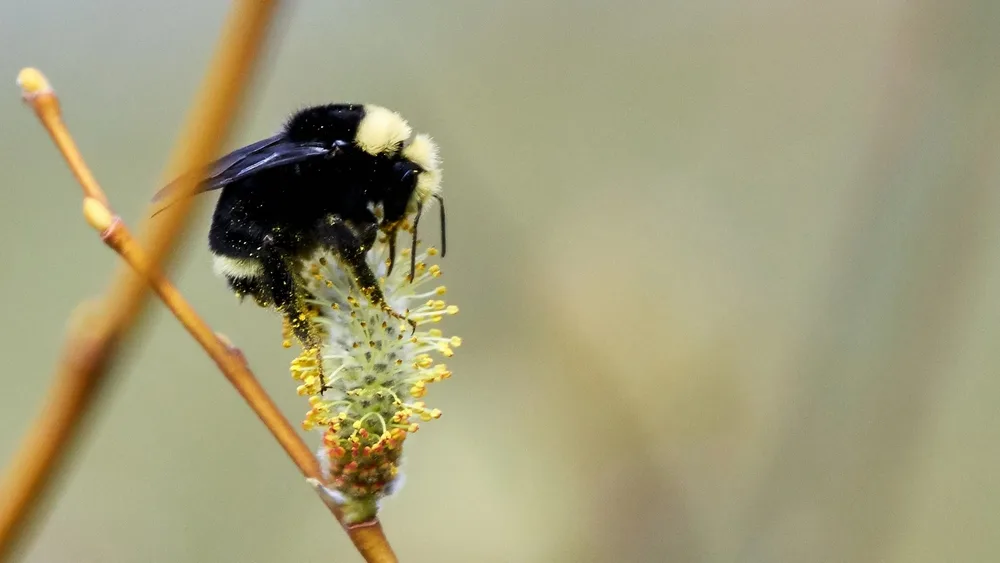
Bumble bees are furry from head to tail and nest in the ground, under sheds, and in old rodent burrows. They don't touch your wood. If that's what you have, read the bumble bee removal page first, because a bumble bee colony dies off on its own in fall and often needs nothing from me.
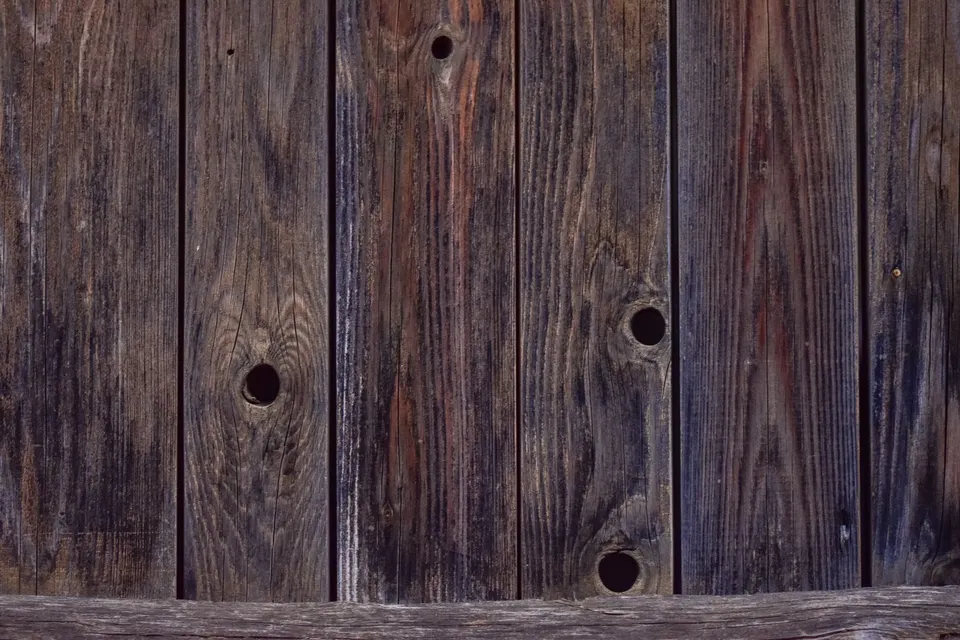
The hole says more than the bee does
Look for a clean circle about half an inch across in bare or weathered wood, with coarse sawdust below it and a yellow brown stain down the board. Fresh sawdust means that tunnel is active, and an old hole with no sawdust under it usually isn't.
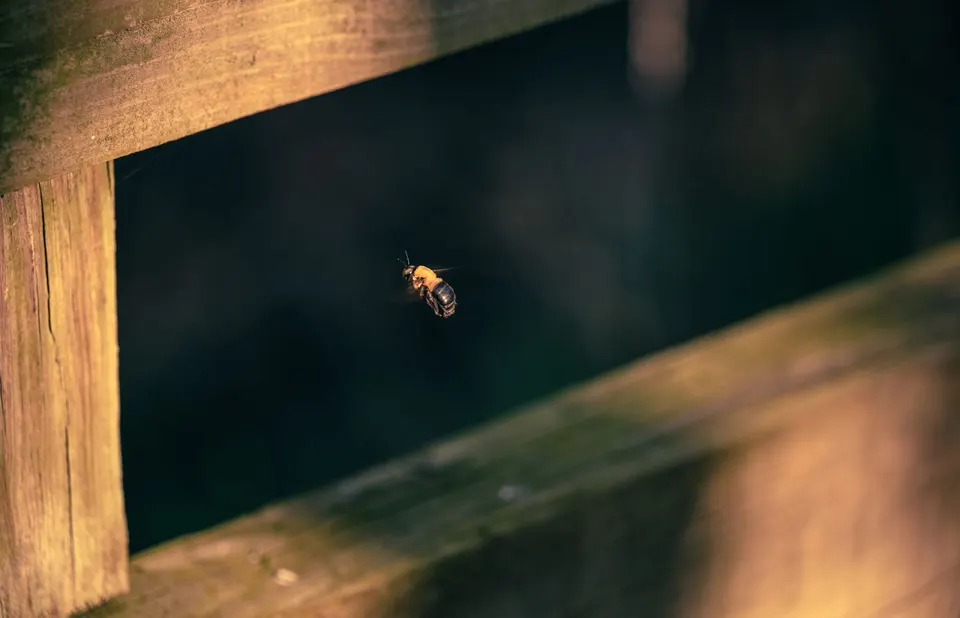
The one buzzing your head is a male
Males patrol the nest area, hover a foot from your face, and chase anything that moves, including your lawn mower. They have no stinger. It's all bluff. The female drilling the wood can sting, but won't.
Not sure which one you've got? Text a photo to (206) 817-7782 and I'll tell you what it is.
Treat, seal, then paint: what each step does and what happens if you skip one
This is the part people get backwards, and it's the main reason carpenter bees come back to a house that was already treated.
| Step | What it does | What happens if you skip it or do it early |
|---|---|---|
| 1. Treat the active tunnel | Puts material right at the entrance the bees walk through, so it reaches the cells down the gallery. | Nothing else holds. A sealed but untreated tunnel is a finished nest waiting for next spring's female, and she'll take it. |
| 2. Give it a few days | Lets the adults keep moving through the treated entrance and anything still inside come out. | Seal on day one and you trap live bees in the wood. They cut a new exit, often on a face you can't see. |
| 3. Seal the hole | Wood filler, caulk, or a glued dowel closes the entrance so the tunnel can't be reused or extended. | An open hole is an invitation. A finished tunnel saves a female weeks of work, so old holes get taken first. |
| 4. Paint or stain the surface | Paint and solid stain make the wood far less attractive than a bare, weathered board. | Sealing one hole in a bare cedar rail moves the next hole four inches down the board. |
I handle the treating. Sealing and painting are Saturday jobs you can do yourself, and I'll mark the spots and say when the wood is ready.
How a carpenter bee job goes, from your first text to the last sealed hole
I work alone, so you get me on the phone, me at the door, and me doing the work.
- 1
You text me a photo
Send a picture of the bee or the hole to (206) 817-7782. I'll tell you what it is, and I'll say so if I don't think you need to hire anyone. Then you pick a time, often the same day if my schedule is open.
- 2
I walk the whole property, not just the hole you found
Carpenter bees work in clusters. One hole in the deck rail means more under the rail cap, along the fascia, or on the shed. I check the undersides and the sun facing boards, tap for hollow spots, and separate active from old.
- 3
I treat the active tunnels
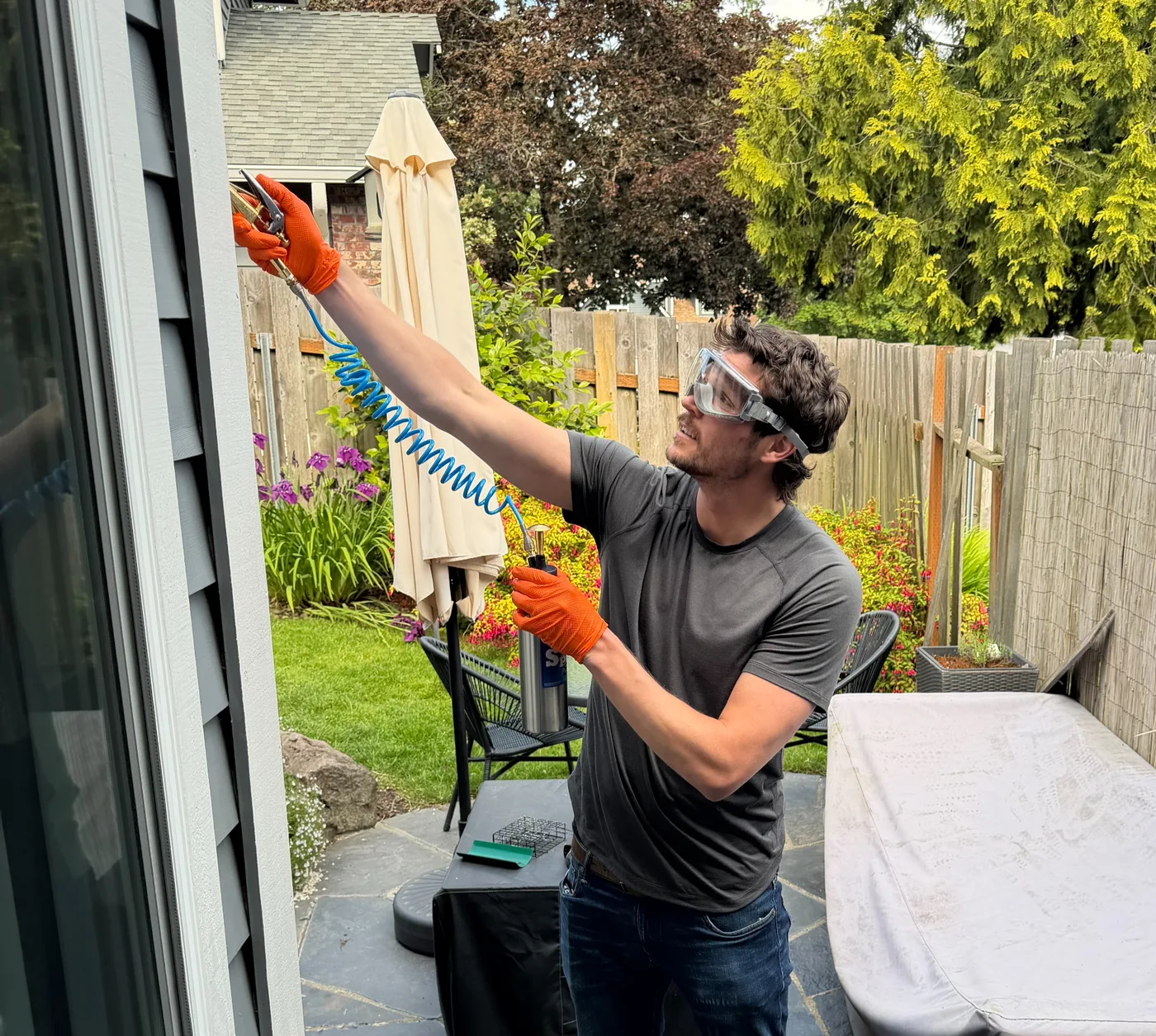
Treatment goes into the entrances, not across the whole deck, so it stays where the bees are. I'm a licensed Commercial Pesticide Operator, and you can read the state license requirements yourself. I'll tell you what I'm putting in the wood and why, and I keep it to the tunnels that are still in use.
- 4
I show you exactly what to seal, and when
Before I leave, you'll know which holes were treated, which old ones you can fill today, and how long to wait on the fresh ones. I'll flag the boards that get drilled next season if they stay bare.
- 5
You close it up and paint
Fill the holes, then paint or stain the surface. That's what keeps the next generation from starting over on the same board. If new holes turn up next spring, text me a photo.
What to do about carpenter bee holes, and what's fine to leave alone
I'd rather tell you not to hire me than take your money for a job that doesn't need doing. Some of these are worth handling now. Some aren't.
Worth doing
- Treat holes in wood that holds something up: deck framing, railings, fascia, and window trim.
- Deal with it in spring while the females are drilling, not in August when the work is done.
- Fill old, inactive holes whenever you like. Filled wood is harder to reuse.
- Paint or solid stain the bare, weathered, sun facing boards. It's the prevention that holds up.
- Call sooner if woodpeckers have started opening the tunnels. That's where water damage begins.
Leave it alone
- Don't seal a hole you watched a bee enter this week. That's the mistake that drives fresh tunnels deeper.
- Don't worry about the bee hovering at your face. He's a male and he has no stinger.
- Don't pay me to treat two holes in a back fence panel you're replacing next year. Fill them yourself.
- Don't swat carpenter bees off your flowers. They're strong pollinators, and the garden isn't the problem.
- Don't spray a wasp or hornet nest you spot on the same walk around. Different job, different risk, and wasp and hornet nest removal is its own call.
Carpenter bee facts worth having before you call
- About the width of the entrance hole, drilled straight in before it turns along the grain
- 1/2 in.About the width of the entrance hole, drilled straight in before it turns along the grain
- You hear the price before any work begins, and I can usually quote a carpenter bee job off a photo
- Quote firstYou hear the price before any work begins, and I can usually quote a carpenter bee job off a photo
- Stingers on a male carpenter bee, which is the one hovering in front of you
- 0Stingers on a male carpenter bee, which is the one hovering in front of you
- Available across the Portland metro when the schedule allows, from my base in West Linn
- Same dayAvailable across the Portland metro when the schedule allows, from my base in West Linn
What carpenter bee control costs around Portland, Oregon, and how I price a job
There is no per-hole rate, because carpenter bee work is really repair work with a bee attached: what you pay tracks how much of the woodwork is involved. I quote after walking the property, and you hear the number before anything gets treated.
Pricing
You get a quote before any work begins
Call or message me for a quote. Send a photo to (206) 817-7782 and I can usually price it without a visit.
Call or text (206) 817-7782How many active holes, and how spread out
Three holes in one deck rail is a quick visit. Thirty across a deck, a pergola, and two runs of fascia takes real time, and price follows time.
How high up the wood is
Rail height and fence height are straightforward. Second story fascia and soffits mean ladder work and a slower pass.
Whether woodpeckers got there first
Torn open tunnels take longer to sort out, because I have to work out which galleries are still active and which are just damage.
How much you're booking at once
If one visit covers carpenter bees, an ant trail in the kitchen, and spiders in the garage, I discount the group instead of pricing three trips.
If you'd rather stop thinking about insects altogether, the annual Complete Insect Protection plan is offered to West Linn, Lake Oswego and Oregon City clients only. It's quarterly visits, preventative interior and exterior treatment, and free priority emergency visits in between.
Getting ahead of next spring's carpenter bees on your deck, fence, and eaves
The best year to handle carpenter bees is the year you first notice the holes. One female's tunnel is a twenty minute problem. Her daughters' branching galleries three seasons later are a carpentry problem, and by then a woodpecker has made it a moisture problem too. If you're in the yard in April watching a big black bee hover at the same fascia board every afternoon, that's your moment.
I'm based in West Linn and I cover the full Portland metro for one time visits. Call or text (206) 817-7782, or send me a photo through the contact form, and I'll tell you what you're looking at. If it's something I'd handle a completely different way, like a honey bee colony I can relocate instead of treat, I'll say so first.
And if the answer is that your fence has four old holes, nothing is active, and your money is better spent on a gallon of exterior paint, I'll tell you that too. I'd rather you call me next year than pay me this year for work you didn't need.
Google reviews
What Portland, Oregon homeowners say after the job
5.0 from 25 Google reviews
Read them on GoogleSam came out the day after I called and had predicted the situation correctly when we chatted on the phone. He was able to get rid of the yellow jackets and even helped with an ant issue we had. Super nice and knowledgeable!
Erin Dhruva Great service, fast response!
Alex Ramberg Sam was great. He was able to come out same day and take care of the yellow jackets living in our siding. He's efficient and professional. Highly recommend!
Susan Thomsen Before calling Sam, I was told by a “professional” Pest service that the infiltrators getting through my siding were honeybees. The bees were quite visible through my window, but we’re misidentified. Fortunately, I called Sam and he corr...
Patty Rissberger I called Sam to help with a yellow jacket hive in an exterior wall of my house. He communicated quickly over text, made an appointment for the same day, arrived when he said he would, and answered all of the questions I had. He treated t...
Sarah H Sam was great. He ended up coming the same day and removing a yellow jacket nest for us. I would highly recommend him to anyone!!
Tori Phillps From start to finish Sam was professional and easy to work with, he was knowledgeable and friendly and well prepared! It was a much more enjoyable experience to work with Sam than calling a big named exterminator. Sam was honest and fair...
Tamsyn Cox Sam was great! Successful wasp removal, easy communication, quick work. Would call again if needed.
Jen P Sam was outstanding to work with! We had a huge hive return to a spot in our attic that had been previously cleared a year earlier. I called Sam on a Tuesday and he came out the next morning! He worked quickly and efficiently to remove t...
Brian Odell I called Sam and was on a job and about done for the day and I explained my situation and he went out of his way and gave me a time he would be here and he was right on time. Did a Sunday removal of a wasps nest on my front porch and onc...
Michael puderbaugh Called Sam and he answered right away. He was able to come out within a few hours and took care of a large yellow jacket nest that had been built in a fern bush next to my driveway where we walk to get into the back gate and garage. He w...
Diana Lu Sam arrived quickly, day of, to save us from an aggressive hornets nest. Sam knew exactly the hornet before even having eyes on it and was communicative and helpful. The experience was much easier than trying to deal with some others in...
Katheryn Hayward We discovered a wasp nest in a planter in our back yard yesterday (and got stung 3 times, ouch!) and called Sam this morning. He was able to come out a few hours later and eradicate the nest. He was thoughtful, knowledgeable, and just a...
Hans Nolf Sam was awesome! Our Tennant texted us late Sunday night stating her heard buzzing in the walls, and Sam was able to come take a look the next day! He is clearly very knowledgeable and gave us quite a bit of information. Extremely kind a...
Megan Delmore Sam was super friendly and worked very efficiently to remove a huge colony of yellow jackets from our soffit…..which was 16 feet off the ground! Recommend very highly, worth every penny!
Laurie Kunert Fantastic service, Timely, Professional, Friendly, Easy to work with, Great value for the price, Good communication. Bye bye yellow jackets!
Scott Klees I had an urgent need at my work location. I texted Sam at 3:30pm. He replied within the hour. We made a plan for meeting to survey and treat the situation. He was on site by 6:15 and done working by 7:00pm. 5 stars for communication, for...
Patrick Clark A+++++! We were so relieved to find Sam the Bee Man! After an unsuccessful removal by a different bee pro, we were feeling helpless until I found Sam. Not all bee experts have the skill to cut into a structure, but Sam does. He used a he...
Jennifer Stafford Professional and friendly to work with. Great communicator and very knowledgeable. Would strongly recommend for any pest control or be removal services. If you have a wasp, they also specialize in that.
Detail Maestro Sam came out the same day I contacted him, and was able to quickly find and remove a yellow jacket nest. He also was able to talk to me about options for treating ants in my backyard, offering varying levels of treatment that felt most...
Ali C I had a bee problem. I messaged Sam this morning at 8:30am. He responded by 8:46am and was at my building by 1pm. Sam is highly knowledgeable and extremely thoughtful. His approach to bee management is taking into account the safety of t...
Nadine Stanton Sam is so knowledgable and is a godsend to us for keeping the ants and spiders away in our home. His membership model is super valuable and reasonably priced and perfect for our needs. He's also just super friendly and takes his time to...
Veronica McOmie Sam's my new pest control go to man. I had a HUGE ant issue in the primary bathroom. Sam came out the same day I called. He assessed the situation, determined the entry point and provided options for getting rid of them. I have signed...
M R Sam was great. When I had a bumble bee hive in my garage, he came out the same day and was able to relocate the hive to a safer location.
ryan spooner Great experience with Sam the Bee Man! Professional and thorough. Highly recommend!
Jessica Reed
Call or Text (206) 817-7782
For the quickest response to your bee, wasp, or pest concern.
Common questions
Carpenter bee questions I get from Portland, Oregon homeowners
Do carpenter bees sting?
The one hovering in your face is a male, and males have no stinger at all. He's bluffing. Females can sting, but she'd have to be handled or pressed against skin to bother. Carpenter bees are among the least dangerous insects I get called about. The damage is the reason to act, not the sting.
How do I get rid of carpenter bees in my deck?
Treat the active tunnels first, wait a few days, then seal the holes, then paint or stain the wood. That order matters. Sealing a live tunnel traps the bees inside and they cut their way out somewhere new. If you'd rather not sort out which holes are active, text me.
Should I plug carpenter bee holes myself?
Yes, once the tunnel is dead. Wood filler, caulk, or a dowel and glue all work fine. The mistake is plugging a hole while the nest is active, because the bees inside chew a new exit and the gallery ends up longer. Old holes with no sawdust you can fill today.
Are wood bees and carpenter bees the same thing?
Same insect. Wood bee, borer bee, and carpenter bee all point at one thing around Portland: a big bee with a shiny black abdomen drilling round holes into bare wood. They're not termites and they aren't eating the wood. They're hollowing out a tunnel to raise eggs in.
When should carpenter bees be treated in Oregon?
Spring is the window that pays off most, when the females emerge and start drilling. You'll see bees at the wood and fresh sawdust below the holes. Late summer treatment still helps, though by then the eggs are laid. Find holes in fall and you can fill them and paint before spring.
Do carpenter bees cause structural damage?
A single tunnel doesn't. The damage comes from repetition: the same board drilled and extended season after season, then woodpeckers opening the tunnels to reach the larvae, then water sitting in wood that no longer sheds it. Decks, railings, fascia, and pergolas are where I see it matter.
Why is a woodpecker pecking holes in my siding?
Usually because something is living in there. Woodpeckers hear carpenter bee larvae inside the galleries and open the tunnels to eat them, which is why the bee damage gets noticed only after a bird makes it obvious. If one section of wood keeps getting hit, look there first.
How much does carpenter bee removal cost in Portland?
Call or message me for a quote. The number depends on how many active holes there are, how spread out they are, and how high up. I quote before I start, so nothing changes on you halfway through. Text a photo to (206) 817-7782 and I'll give you a number before I drive out.
Can carpenter bees be handled without pesticide?
Partly, and this is the one service where that is genuinely true. Most of the lasting result comes from sealing and painting rather than from anything I apply, so the woodwork does the heavy lifting. An active tunnel usually still gets treated first, because sealing bees into wood they are already chewing sends them sideways through the grain.
Request a quote
Step 1 of 1