
Ant Control
Ant Exterminator in Portland, Oregon: It Starts With the Nest and the Water That Fed It
Sugar ants on the counter and carpenter ants in a wall are two different jobs. I identify the species, find the nest, and tell you which water problem is keeping them there.
- Same-day service available
- Licensed Commercial Pesticide Operator
- Quoted before any work begins
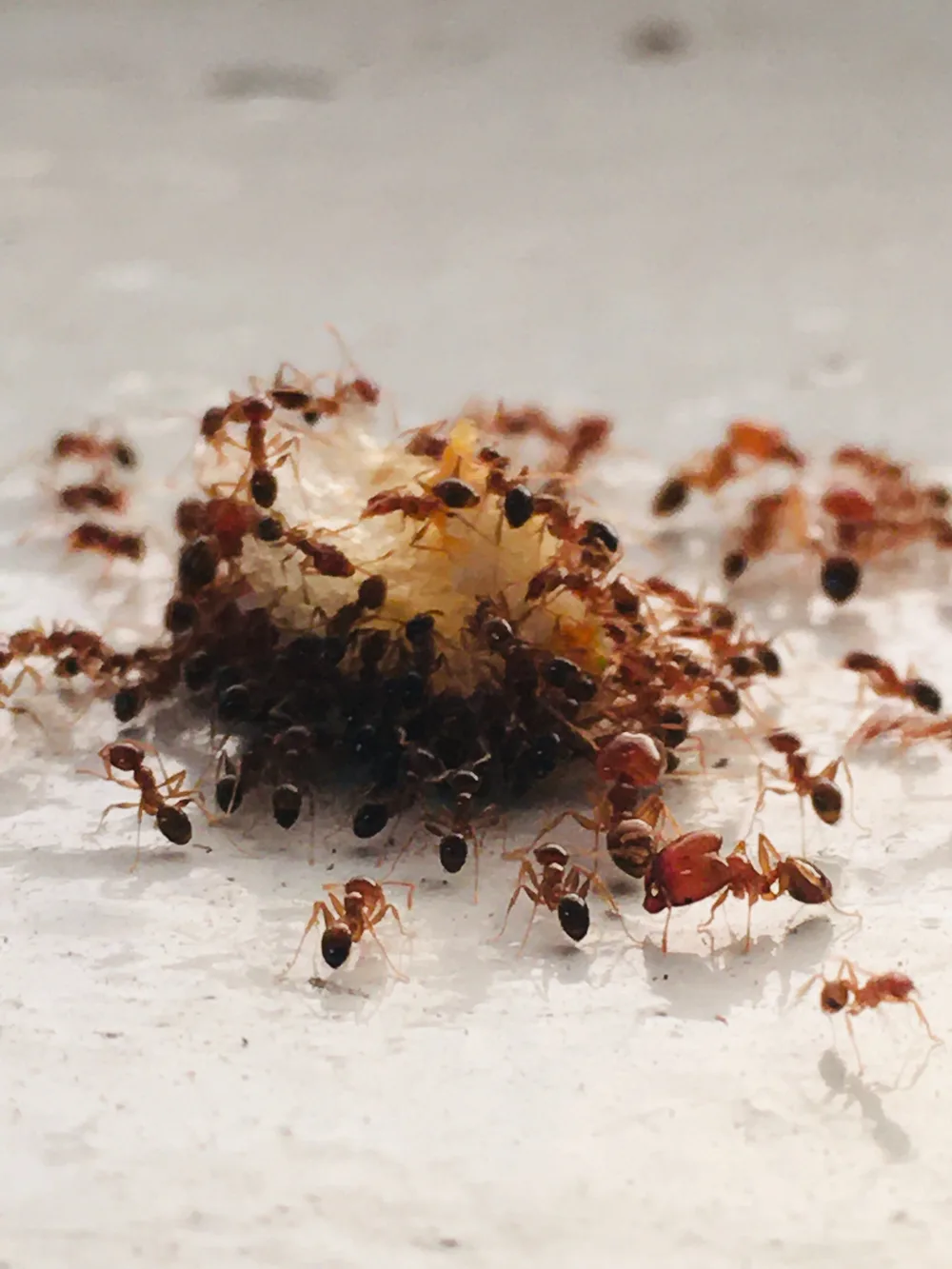
How do you get rid of ants in a Portland, Oregon house for good?
You end the colony instead of the trail, then take away what invited it in. That second half matters more here than people expect, because the ant that does real harm around Portland is the carpenter ant, and carpenter ants usually move into wood that's already wet. I bait and treat the nest, then show you the gutter or the crawl space vent keeping that wood soft. Skip the water and you're doing this again next spring.
- A sugar ant trail and a carpenter ant nest in a wall need different work, so identification comes first.
- Where bait works, it does the heavy lifting, because workers carry it home. Carpenter ants can be picky eaters, so it isn't the whole plan.
- Carpenter ants usually pick wood that water already softened, which makes the leak part of the infestation.
- Every job is quoted before I start, and you can text a photo to (206) 817-7782 for an ID first.
Carpenter ants in Portland, Oregon are a water problem before they are an insect problem
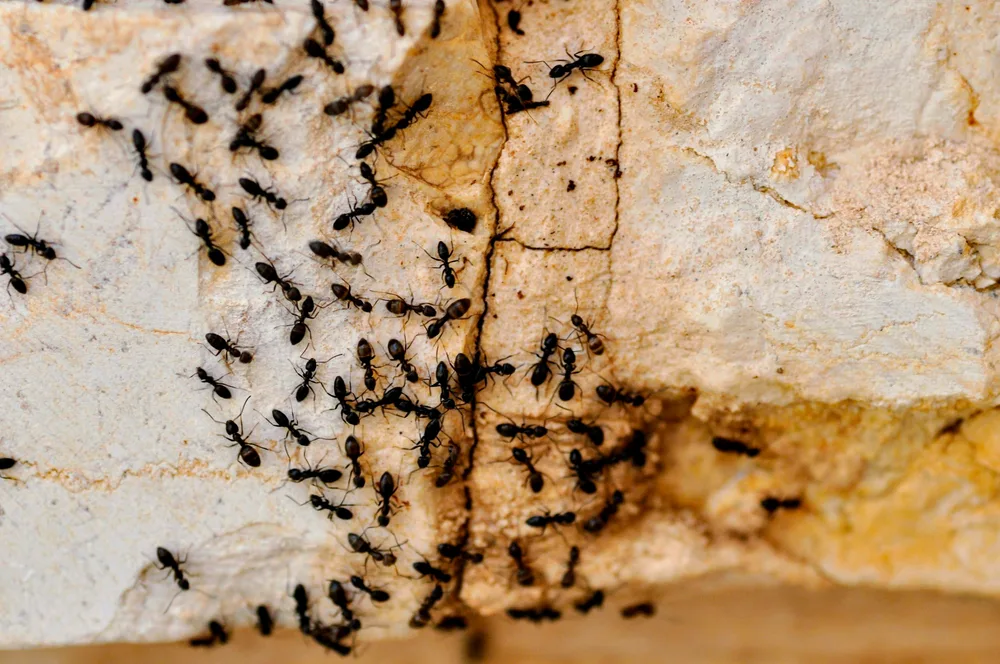
Of all the ants around here, the carpenter ant is the one that earns a phone call. The Pacific Northwest handbook lists them among the most important structural insect pests in much of the region because of their habit of nesting inside dwellings. They don't eat wood. They chew smooth, hollow galleries through it to make room for the colony, and the shavings get pushed out somewhere you eventually notice.
What usually decides whether they pick your house is moisture. Carpenter ants go for wood that has already gone soft: a window frame that never dries, deck joists under a planter, attic sheathing under a slow roof leak, crawl space timber over damp ground. Dry framing is hard work for an ant. Wet framing is easy. They can nest in sound, dry wood too, so damp wood is where I look first, it just isn't the only place I look.
So I'm chasing two things on a carpenter ant call, the nest and the water feeding it. Treat one without the other and you've bought a season. I hold a Commercial Pesticide Operator license, not a contractor license, and I'd rather be honest about a repair than sell you a second treatment.
People mix carpenter ants up with carpenter bees, and the wood tells you which is which. A carpenter bee drills one clean round hole in bare, dry wood. Carpenter ants leave a ragged slit with coarse shavings under it, and the wood is damp.
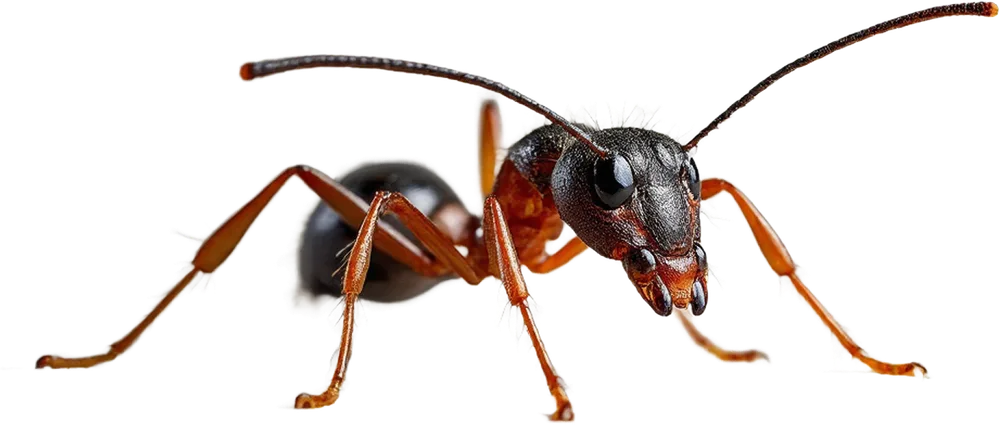
Telling carpenter ants apart from the sugar ants in your kitchen
Two different insects, two different plans. Here's how I sort them out on the phone.
| What you notice | Carpenter ants | Sugar ants (odorous house ants) |
|---|---|---|
| Size and color | A quarter to half an inch, black or black with a rust colored middle | About an eighth of an inch, an even dark brown |
| Where the trail runs | Up siding, along framing, out of a wall void or a stump | Counters, the sink edge, under the dishwasher, a window seam |
| When they're busiest | After dark, heaviest around dusk | All day, and heavier for days after rain |
| What they leave behind | Coarse shavings like pencil sharpener dust, sometimes with insect parts | Nothing but the trail itself |
| What it says about the house | Usually wood somewhere is holding water and a colony lives in it | Food is reachable and a spot near it stays wet |
Not sure which is on your counter? Text a photo to (206) 817-7782. I identify insects from photos before I come out, and sometimes that saves you a visit.
The damp spots where carpenter ants set up inside Portland, Oregon homes
Four places I check first on a carpenter ant call. All four have the same thing going on, wood that never gets to dry.
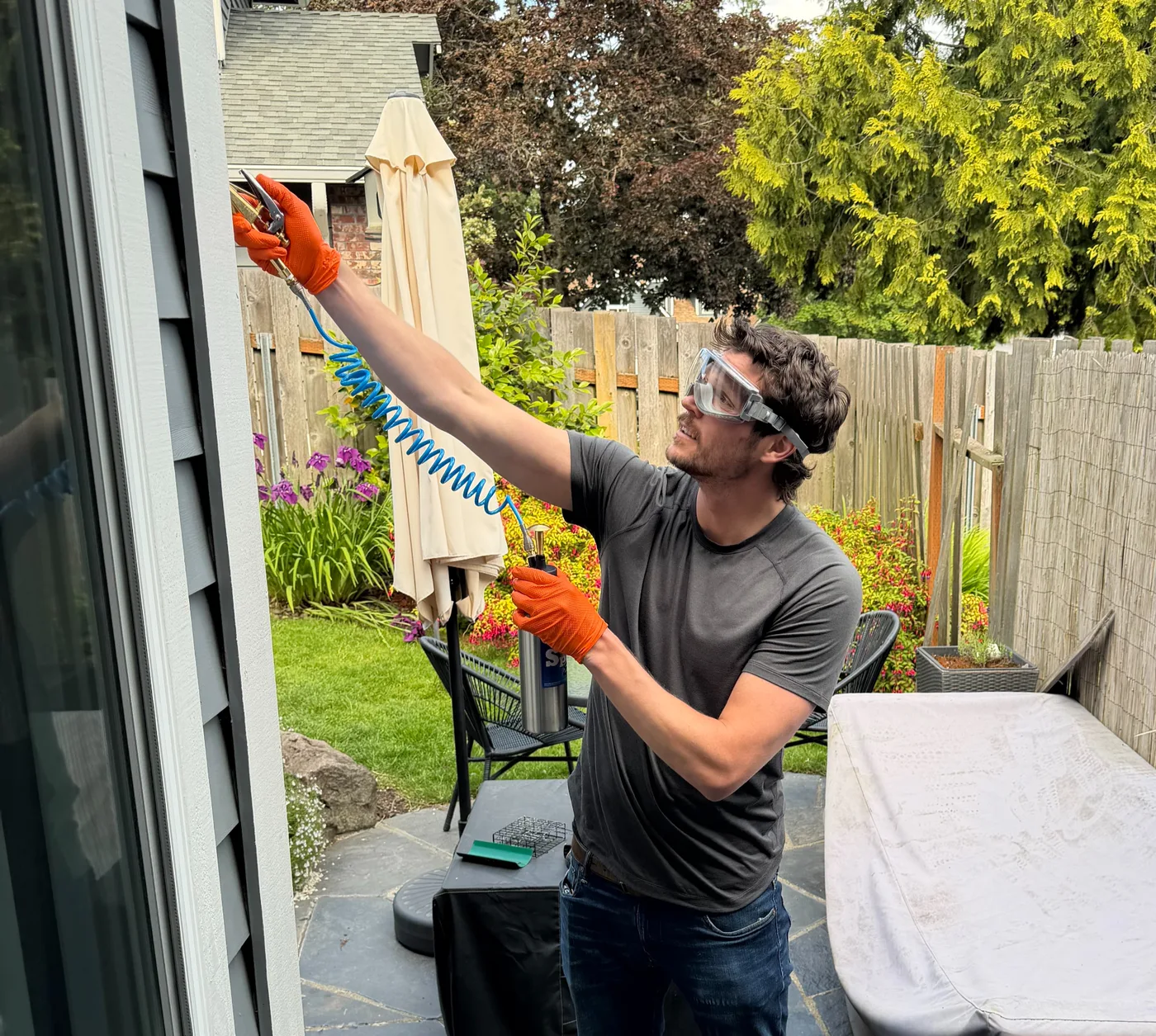
Window and door frames that never dry out
Failed caulk, tired flashing, or a sprinkler head hitting the siding every morning. The sill and the framing behind it stay wet all season, and that's the softest wood in the wall.
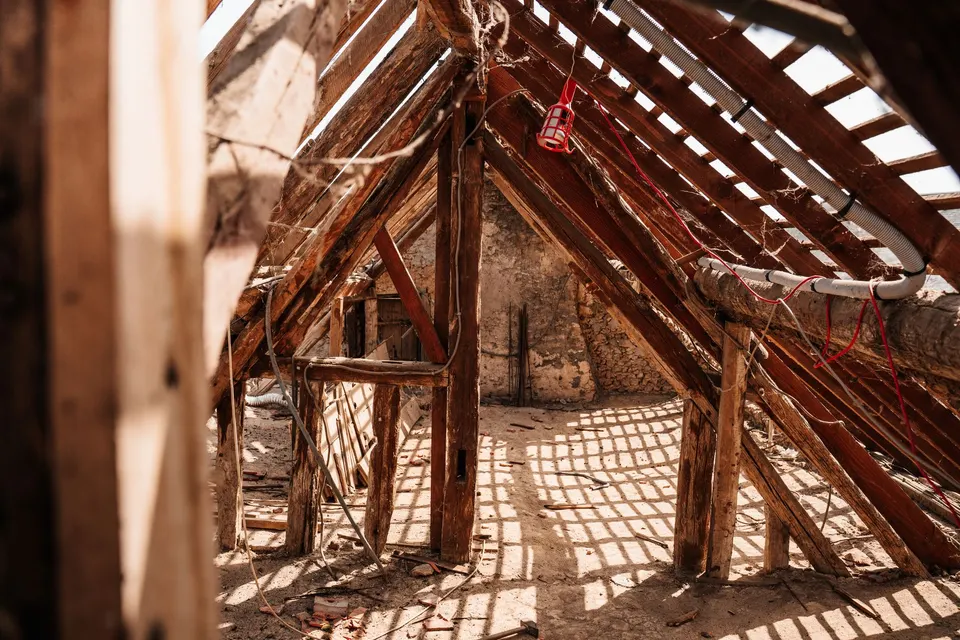
Attic sheathing under a slow roof leak
A leak too small to show on the ceiling is still plenty for an ant. I check the plywood around vent boots, chimney flashing, and valleys. Where the stain gives when I press it, that's where the galleries run. Deck ledgers do the same job outside.
Crawl space framing over damp ground
Torn vapor barrier, standing water after a storm, blocked vents. The sub-floor edges soften and stay that way. Same setting that drives spider activity, so I look down there even when the ants are in your kitchen.
Under the kitchen sink and the dishwasher
A slow supply line drip swells the cabinet base and the sub-floor beneath. That one wet square foot feeds sugar ants and gives carpenter ants a foothold mid-house.
The nest inside your house may be a satellite. The parent colony often sits outside in a stump, a woodpile, or a tree with a dead limb, well away from the wall you're watching.
What an ant exterminator visit actually looks like, start to finish
Same order every time, whether it's one counter trail or a wall full of carpenter ants.
- 1
Send a photo before anything else
Text a picture to (206) 817-7782 and I'll tell you the species and how urgent it is. If it's a few foragers that wandered in after a rainstorm, I'll say so.
- 2
I walk the outside first
Gutters, downspouts, the grade at the foundation, the deck, the crawl space vents. I'm reading where water lands and where it sits. The ant story is written outside.
- 3
Then I find the nest, or narrow it down
Following a trail at dusk, tapping framing and listening, checking under the shavings for the slit they came out of. I want the nest, not the highway.
- 4
Bait first, then treat where it counts
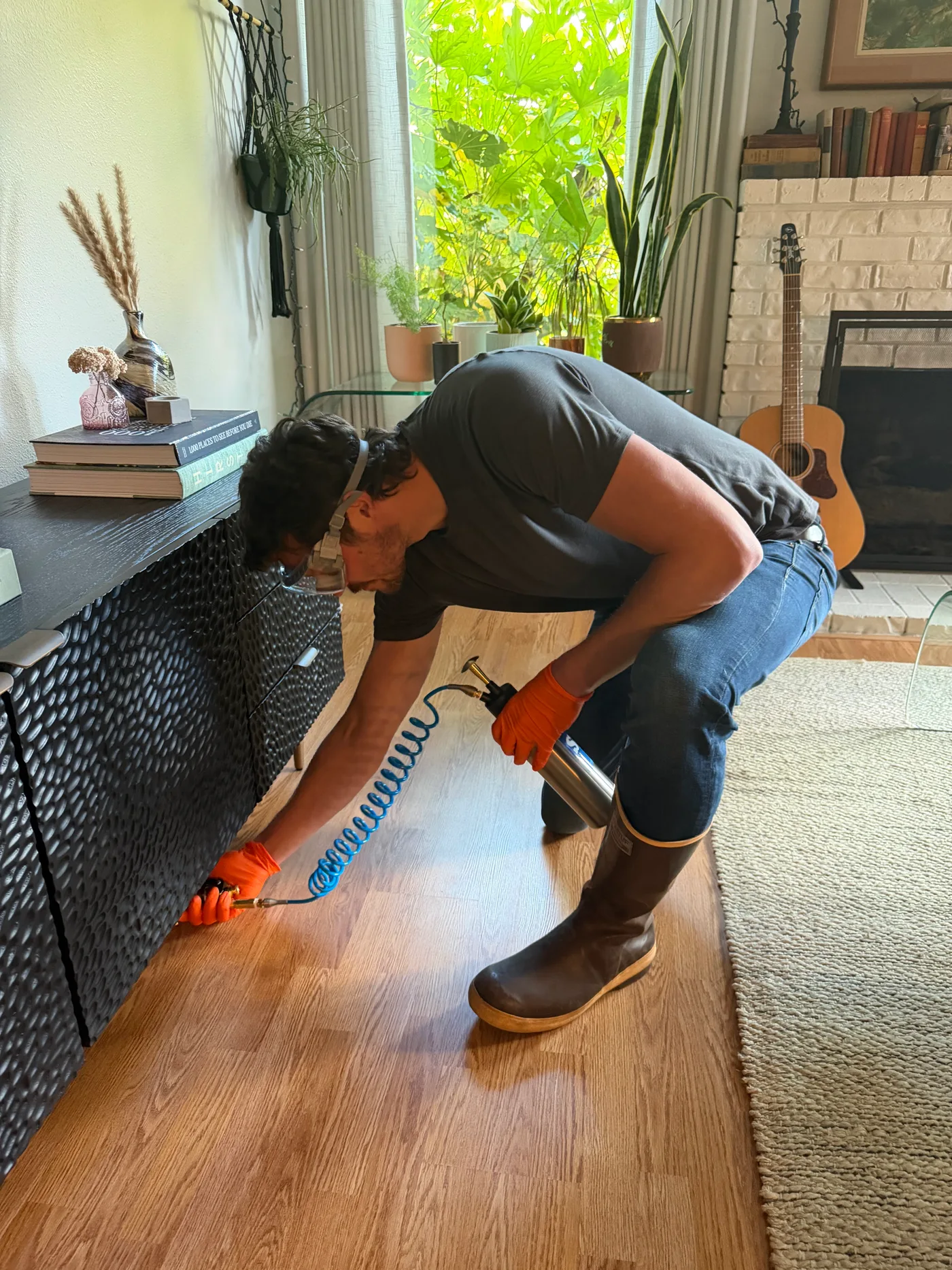
Workers carry bait back along the trail to the parent colony, which is what actually ends it. Carpenter ants can be picky about bait, so it doesn't ride alone: non-repellent product goes on the exterior perimeter, the entry points, and into the void, placed rather than blanket sprayed.
- 5
You get a fix list in priority order
The gutter that overflows, the flashing that needs a roofer, the vapor barrier to patch, the planter to move off the deck. I'm not selling that work and take no cut of it.
- 6
Then I check the result
Foraging carries on after treatment, and that's the bait doing its job. Give it a couple of weeks. If steady activity is still there, call me and I'll look again.
When ants show up around Portland, Oregon, season by season
Ant calls here follow the rain more than the thermometer.
- February to March
First warm afternoons, first trails
A few dry days in the fifties and the foragers are out. An early trail on a foundation or a deck rail is the cheapest warning you get.
- April to May
Winged ants indoors point at a nest indoors
Reproductives leave to start new colonies. If they come out inside the house, at a window or a light fixture, the nest is in the structure, not the yard.
- June to August
Night work and satellite nests
Carpenter ant activity concentrates after dark, so take a flashlight out at ten and watch the deck rail. Summer is when sugar ants push indoors hunting for water.
- September to October
The rain returns and so do they
The first storms drive foragers under cover and refill every wet spot around the house. Best time of year to clean the gutters, because you're cutting off next spring's nest site.
- November to January
Quiet outside, still going in a warm wall
Colonies outdoors slow down. A colony in a heated wall doesn't, so a winter kitchen trail almost always means the nest is in the structure.
To stay ahead of it, Complete Insect Protection covers quarterly visits and preventative treatment for West Linn, Lake Oswego and Oregon City clients.
What to do about an ant trail before you call an ant exterminator
Some ant problems are worth paying for and some aren't. I'd rather tell you which one you have.
Worth doing yourself
- Wash the trail down with soapy water. Ants follow a scent line they laid themselves, and taking it away breaks the route.
- Hunt for the food and the water. A drip under the dishwasher, a bowl of cat food, an open bag of birdseed.
- Clean the gutters and aim the downspouts away from the foundation. That does more against carpenter ants than anything I can apply.
- Leave the ants in the lawn, the driveway cracks, and under the patio stones alone. They aren't hurting your house.
- Give a small kitchen trail a week after a rainstorm. If you cleaned the line, dried the spot, and it stays gone, you don't need me.
Worth skipping
- Don't open with a repellent spray on a visible trail. It's the natural move, and it can split a colony into several and hide the nest from me.
- Don't cut into drywall to chase a sound you heard at night. Wait until I've found where the galleries run.
- Don't caulk the entry hole before treatment. Sealing a colony in a wall doesn't end it, it just moves the door.
- Don't stack firewood against the siding or pile bark mulch over the foundation line. Both hold water where you least want it.
- Don't panic at big black ants. Finding them while the shavings are still on the sill is the good version.
What ant control costs around Portland, Oregon, and how to get your number
The honest answer is that there isn't a flat rate, because a few scouts under a sink and carpenter ants chewing through a wall are not the same job. Every visit gets quoted before I start, and a photo texted over is usually enough for me to price it without coming out first. Four things decide where yours lands.
Pricing
You get a quote before any work begins
Call or message me for a quote. Send a photo to (206) 817-7782 and I can usually price it without a visit.
Call or text (206) 817-7782Which ant it turns out to be
A sugar ant trail with an obvious entry point is a short visit. A carpenter ant nest in a wall means a full inspection inside and out.
Where the nest sits
A void behind a kitchen cabinet is quick. Attic sheathing, or a crawl space I cross on my back, takes longer, and time is the price.
The water fix isn't on my invoice
I find the moisture problem and write it down for you at no extra charge. The gutter or roof repair belongs to a contractor, and I take no referral fee.
Booking more than one problem at once
If ants are one of several things going on, combining ant and spider control into one visit earns a discounted rate.
I'm a new, independently owned local business and I work alone, so you deal with me start to finish. Call or text (206) 817-7782, or send a photo through the contact form. Same-day service is available across the Portland metro when the schedule allows.
Google reviews
What Portland, Oregon homeowners say after the job
5.0 from 34 Google reviews
Read them on GoogleSam is incredible. I highly recommend working with him. I had a wasp nest in the ground along the side of my house that became very active when approached, making it very challenging to get to my trash cans. Scheduling was easy and he ca...
Amy Andreini The day before closing on the sale of my listing in West Linn, my sellers found a handfull of yellow jackets in their home. We needed to locate the nest and treat it ASAP to meet our set closing date. I hoped on the phone and made a few...
Kaliko Maciel We had yellow jackets getting into our attic and nesting. Called Sam and he responded quickly and professional. Reasonably priced
Steve Peterschmidt If you’re dealing with bees or yellow jackets, call Sam The Bee Man! Sam was prompt, professional, and extremely knowledgeable. He safely eliminated a yellow jacket nest in our attic and roofline, explained the entire process ahead of ti...
John and Julie Burgoyne Wow! Sam did such a great and efficient job getting rid of a nest of very aggressive yellow jackets right by my front door. Sam was quick to respond to my request, upfront about cost, arrived on-time, and got rid of the yellow jackets re...
Jenn Cox We noticed a ground yellow jacket problem late in the season, which means the nest was really big. Sam was friendly, came out promptly, and took care of the nest. Great service!
Matthew Mitchell Sam is responsive, friendly, and easy to work with. We had a wasp problem. He came out same day and the price was reasonable. Highly recommend!
Seth Reddy Found a large yellow jackets nest in our bushes. Called Sam late Wednesday afternoon and he was at our house mid morning on Friday! Very friendly and efficient. Would definitely recommend.
Kaylie Stickney Sam did a great job getting rid of the yellow jackets under our front hedge. It took him only an hour and was able to get them all in one try. On time and professional. Will use again for any bee trouble.
David Sam came out the day after I called and had predicted the situation correctly when we chatted on the phone. He was able to get rid of the yellow jackets and even helped with an ant issue we had. Super nice and knowledgeable!
Erin Dhruva Sam was great. He was able to come out same day and take care of the yellow jackets living in our siding. He's efficient and professional. Highly recommend!
Susan Thomsen Before calling Sam, I was told by a “professional” Pest service that the infiltrators getting through my siding were honeybees. The bees were quite visible through my window, but we’re misidentified. Fortunately, I called Sam and he corr...
Patty Rissberger I called Sam to help with a yellow jacket hive in an exterior wall of my house. He communicated quickly over text, made an appointment for the same day, arrived when he said he would, and answered all of the questions I had. He treated t...
Sarah H Sam was great. He ended up coming the same day and removing a yellow jacket nest for us. I would highly recommend him to anyone!!
Tori Phillps From start to finish Sam was professional and easy to work with, he was knowledgeable and friendly and well prepared! It was a much more enjoyable experience to work with Sam than calling a big named exterminator. Sam was honest and fair...
Tamsyn Cox Sam was great! Successful wasp removal, easy communication, quick work. Would call again if needed.
Jen P Sam was outstanding to work with! We had a huge hive return to a spot in our attic that had been previously cleared a year earlier. I called Sam on a Tuesday and he came out the next morning! He worked quickly and efficiently to remove t...
Brian Odell I called Sam and was on a job and about done for the day and I explained my situation and he went out of his way and gave me a time he would be here and he was right on time. Did a Sunday removal of a wasps nest on my front porch and onc...
Michael puderbaugh Called Sam and he answered right away. He was able to come out within a few hours and took care of a large yellow jacket nest that had been built in a fern bush next to my driveway where we walk to get into the back gate and garage. He w...
Diana Lu Sam arrived quickly, day of, to save us from an aggressive hornets nest. Sam knew exactly the hornet before even having eyes on it and was communicative and helpful. The experience was much easier than trying to deal with some others in...
Katheryn Hayward We discovered a wasp nest in a planter in our back yard yesterday (and got stung 3 times, ouch!) and called Sam this morning. He was able to come out a few hours later and eradicate the nest. He was thoughtful, knowledgeable, and just a...
Hans Nolf Sam was awesome! Our Tennant texted us late Sunday night stating her heard buzzing in the walls, and Sam was able to come take a look the next day! He is clearly very knowledgeable and gave us quite a bit of information. Extremely kind a...
Megan Delmore Sam was super friendly and worked very efficiently to remove a huge colony of yellow jackets from our soffit…..which was 16 feet off the ground! Recommend very highly, worth every penny!
Laurie Kunert Fantastic service, Timely, Professional, Friendly, Easy to work with, Great value for the price, Good communication. Bye bye yellow jackets!
Scott Klees I had an urgent need at my work location. I texted Sam at 3:30pm. He replied within the hour. We made a plan for meeting to survey and treat the situation. He was on site by 6:15 and done working by 7:00pm. 5 stars for communication, for...
Patrick Clark
Call or Text (206) 817-7782
For the quickest response to your bee, wasp, or pest concern.
Common questions
Ant control questions Portland, Oregon homeowners ask me
How do I know if I have carpenter ants or just sugar ants?
Size is the quickest tell. Carpenter ants are big, a quarter to half an inch, black or black with a rust colored middle, and they work at night. Sugar ants are about an eighth of an inch and run all day. Coarse shavings under a sill mean carpenter ants.
Do carpenter ants actually eat the wood in my house?
No. They chew smooth galleries through it for nest space and push the shavings out, so the wood loses strength without ever being eaten. They usually go after framing that water has already softened, which is why a roof leak is the real story behind most carpenter ant calls.
Why do the ants come back every spring after I spray?
A surface spray kills the foragers you can see while the colony stays put, and a repellent product can push a colony to split into several. Bait works the other way, since workers carry it back to the parent colony, and that takes days to a couple of weeks. If the wood's still wet, the site stays attractive to the next colony.
I found winged ants inside my house. What does that mean?
Winged ants are reproductives leaving to start new colonies. When they emerge inside, at a window or around a light, the nest is in the structure rather than the yard. Send me a photo first, because other insects look similar at a glance.
Are ant treatments safe around kids and pets?
I place product in targeted spots like cracks, entry points, and voids instead of blanket spraying living space, and I walk you through every spot before I use anything. If you'd rather I stayed off the product, say so up front and I'll tell you honestly how far that gets you, which with a carpenter ant colony in a wall is usually not far enough.
Should I fix the leak before you treat?
No need to wait. I treat the colony now, because that's the part with a deadline. The repair decides whether they come back, so it can follow on its own timeline. I'll show you the wet wood and leave a short list ranked by what matters most.
What does ant control cost in Portland?
Call or message me for a quote. The price depends on the species, where the nest is, and how much of the house needs treating. I quote before I start, and booking several services together earns a discounted rate. Same-day service is available when my schedule allows, so call or text (206) 817-7782.
Request a quote
Step 1 of 1