
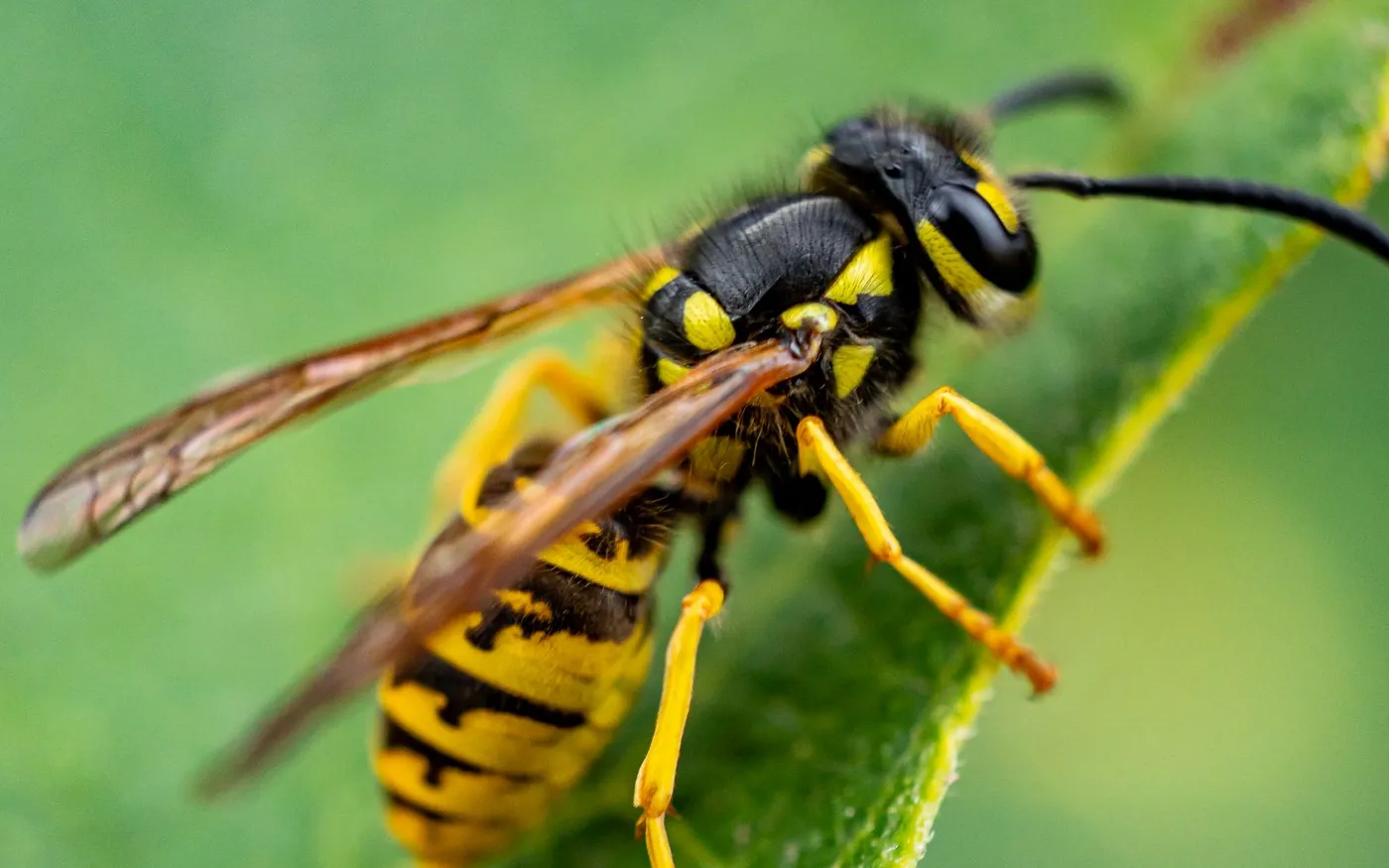
Mid-October brings cooler mornings, wet leaves, and a common hope: surely the yellowjackets are about to disappear. Some of that hope is justified. A yellowjacket colony does not last forever. But a cold snap on the forecast is not the same as a nest that is finished, and a few warm afternoons can bring workers right back to the entrance.
Here is how the colony year works, what changes by late October, and how to decide whether a nest near your home is worth acting on now.
How a Yellowjacket Colony Lives and Ends
Oregon State University’s yellowjacket guide explains that workers become a nuisance by midsummer, once they leave the nest to forage for food. OSU Extension adds that the colony grows through the summer and reaches its peak size in late summer and early fall, becoming more aggressive as it grows.
Then the season turns. In many parts of Oregon the colony dies after the first hard freeze, while newly mated queens survive elsewhere through the winter and start new nests the following spring. The nest itself is not what carries over to spring. The queens do.
That means the same nest can look very different in September and in late October, depending on the weather that came between.
Why Late October Is Still Not a Safe Assumption
The key phrase is first hard freeze. A single cold morning is not the same thing, and Portland’s weather does not follow a calendar. If the colony has not had a hard freeze yet, the workers may still be flying and the entrance may still be busy.
So do not read the date and conclude the nest is dead. Read the entrance instead. If you can see it safely from a distance, notice whether insects are still moving in and out on a mild afternoon. A steady stream says the colony is still active. A truly quiet entrance over several days is a better sign, though it still does not prove the nest is empty.
Do not walk closer to check. Stay well back, and keep children and pets away from the area.
Does a Late Season Nest Still Need Removal?
OSU lists action against yellowjackets as optional, and recommends taking it when a nest is near homes or recreational areas, or when someone has a known allergy. That is a sensible way to think about October too.
Ask a few practical questions:
- Do people or pets walk, mow, or work within a few feet of the entrance?
- Is the nest in a wall void, under a deck, or near a door you use every day?
- Does anyone in the household have a known sting allergy?
- Is work planned nearby, such as gutter cleaning, painting, or siding repair?
If you answer yes to any of these, the nest is worth an assessment now. If the nest sits in a far corner of the yard that no one visits, you may decide to leave it alone and let the season end it.
Why Not Just Wait for the Freeze?
Waiting is a reasonable choice for a remote nest and a poor one for a nest beside your back steps. Colonies peak in size in late summer and early fall, so an active nest in October can still hold plenty of insects ready to defend it.
Treating a nest is also not a do-it-yourself job in a busy spot. OSU notes that yellowjackets can sting multiple times when defending their nest, and that treatment is often most effective at night, when most of the colony is inside. Spraying a nest at dusk from a ladder is the situation to avoid.
If you cannot tell whether the activity is a nest or just a few foragers visiting, read our guide on what yellowjackets in September mean for your yard for the difference.
What To Do While You Decide
You can make the area less appealing without going near the nest:
- Keep trash containers tightly covered.
- Clean up spilled food and drinks outdoors.
- Remove fallen fruit from the ground.
- Skip sweet perfumes and bright clothing when you have to work near an active nest.
Take a photo of the entrance from a safe distance and note the time of day you saw activity. That information helps an inspector tell what you have without anyone getting close.
When to Ask for Help
Sam The Bee Man handles yellowjacket removal as part of a broader wasp, hornet, and yellowjacket service for homes in West Linn and the Portland metro area. If the nest is near a door, in a wall, or beside a place your family uses, send us the location and what you have seen. We will help you decide whether to treat the nest now or let the season do the work.