
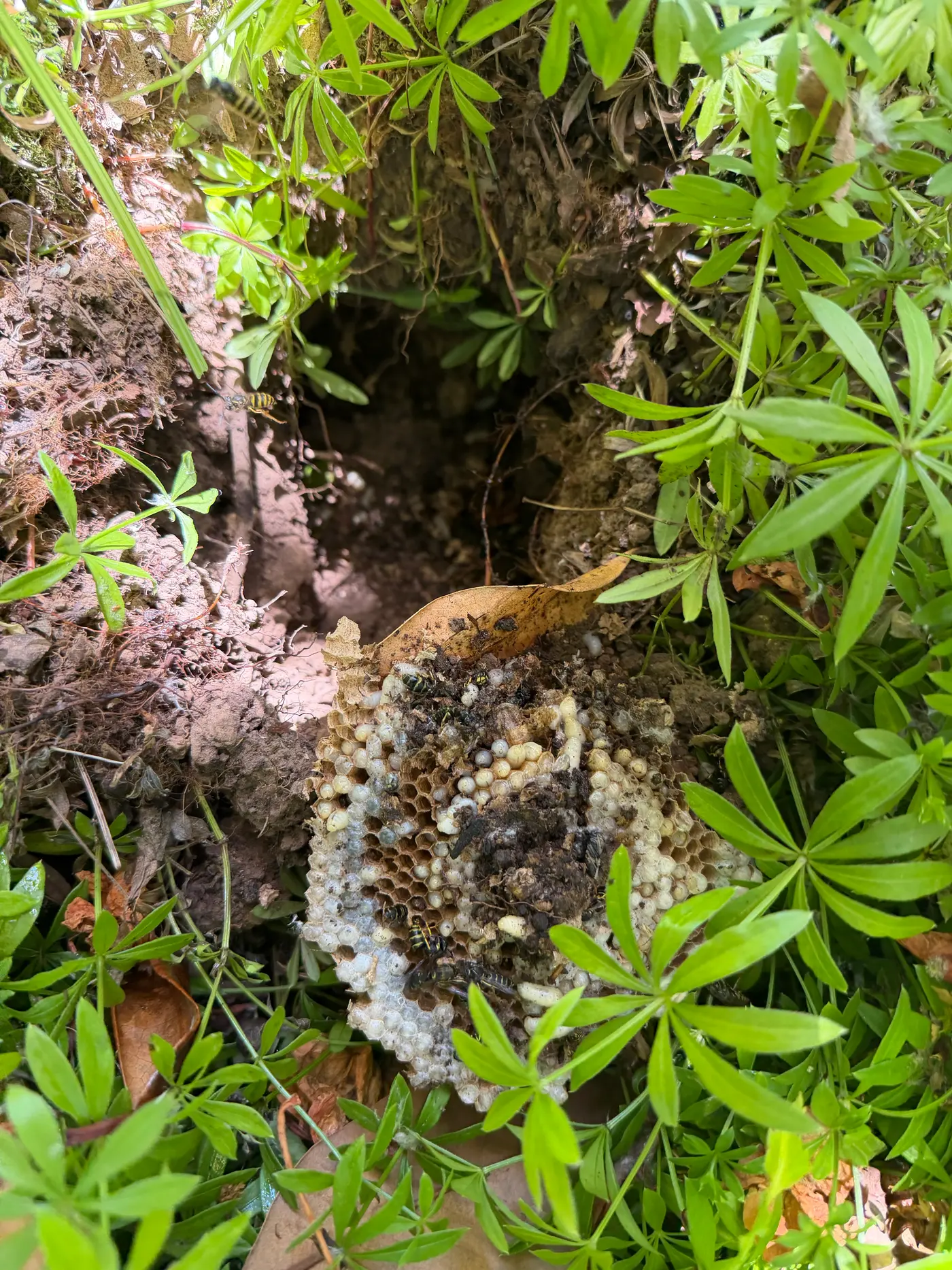
September can be the month you finally notice the yellowjackets that have been around all summer. They may be checking a plate on the patio, visiting the trash, or flying into a gap beside the back steps. Before you start spraying, find out which of those situations you have.
For a homeowner in Portland, West Linn, or the surrounding area, the immediate question is practical: can people use the space without getting close to a suspected nest? If the answer is no, change the route or move the activity while you arrange an assessment.
Why the activity stands out now
Oregon State University Extension explains that yellowjacket colonies can reach their largest size in late summer and early fall. Cooler days do not mean an active colony has already disappeared.
That seasonal context is useful, but it does not establish what is happening on your property. Several wasps investigating lunch could have come from somewhere else. Regular traffic through the same opening deserves a different conversation.
Watch from a distance and describe the pattern. Is the insect landing on food and leaving? Are insects repeatedly going into the soil, siding, or an enclosed nest? You do not need to stand beside the entrance to answer. If the view is poor, leave it poor and tell the person inspecting the property what you could see.
Start with the places people have to use
A suspected nest beside an unused corner of the yard poses a different planning problem from one at the only back door. Make a short list of the routes that cannot easily be avoided: the path to the car, the dog’s outdoor area, a gate used by deliveries, or the steps children use after school.
Tell everyone who uses the property where you have seen the activity. Include the gardener or other contractor before they arrive. “Please avoid the hedge by the shed until we have had it checked” gives them a workable instruction without asking them to identify the insects themselves.
Do not mow over a suspicious ground opening, shake a branch to see what happens, or move furniture that appears to contain a nest. Those actions add disturbance without providing information you need to collect personally.
Make a patio less interesting to foragers
If activity is concentrated on food rather than one opening, clean up serving dishes and spills when it is safe. Keep drinks covered and make sure the outdoor trash has a lid that closes. Check whether pet food or fallen fruit is also available.
These changes are worth making even if you also need a nest assessment. They are not proof that an established colony has been removed. Use the next few observations to see whether insects keep returning to one point on the structure after the food is gone.
Our yellowjacket removal page covers the service itself. A photo of the activity and a wider photo of the area help connect that service to the actual situation at your home.
Leave the entrance alone
If insects are going into the house, resist treating the opening as a simple caulking job. Do not plug it, tape it, or probe it with a tool before the activity has been assessed. Let the person doing the work determine what is nesting there and the appropriate order of treatment and repair.
Also mention any product already applied. A quick message such as “We sprayed the gap yesterday evening; activity continues today” is useful. There is no benefit in hiding an unsuccessful attempt or repeating it just to have something new to report.
What to send when you ask for help
Provide the address or neighborhood, the location on the property, when you noticed the activity, and whether it affects access to a door or walkway. Include a photograph only if you can take it from a safe position. A clear description is better than a close-up that required you to approach the insects.
Sam The Bee Man is based in West Linn and serves the Portland metro area. We handle wasps, hornets, and yellowjackets as well as bee work. Contact us about the activity at your home so the next step is based on the insect and the nest location, not just the month on the calendar.