A line of big black ants on the kitchen counter in November is not what most people expect. Outside, the ground is cold and wet. The ants in the yard have slowed down. These ones have not.
In the Portland area, that usually means the ants found somewhere warm and damp inside the house. The ants are a symptom, and the wood is the problem.
Why Carpenter Ants Show Up in Winter
The Pacific Northwest Insect Management Handbook notes that carpenter ants are among the most important structural insect pests in much of the region because they nest inside buildings. It also explains that workers from an outdoor parent nest frequently move into a dwelling as a satellite colony.
In a heated wall, a colony does not slow down for winter the way one outdoors does. That is why a trail in the kitchen in January usually means the nest is in the structure.
Why Rain Matters for Carpenter Ants
Carpenter ants do not eat wood. They excavate it to make room for the colony. The wood they choose is usually softened by moisture first: a window frame that never dries, deck joists under a planter, a crawl space timber over damp ground.
The wet season refills every one of those spots. Failed caulk, a clogged gutter or a downspout aimed at the foundation keeps wood wet from October through spring. Carpenter ant control in Portland treats the nest and the water that fed it together.
What a Carpenter Ant Nest Looks Like From the Inside
The handbook describes ants kicking out sawdust as they dig. Small piles near a baseboard, a window sill or a door frame, sometimes with insect parts, can show where a nest is.
Other signs include:
- Big ants at night, since foraging is heaviest after dark.
- A faint rustling inside a wall or ceiling.
- Winged ants indoors, which point to a nest in the building rather than the yard.
- Smooth, hollow galleries in the wood if it is ever opened.
Carpenter Ants or Sugar Ants?
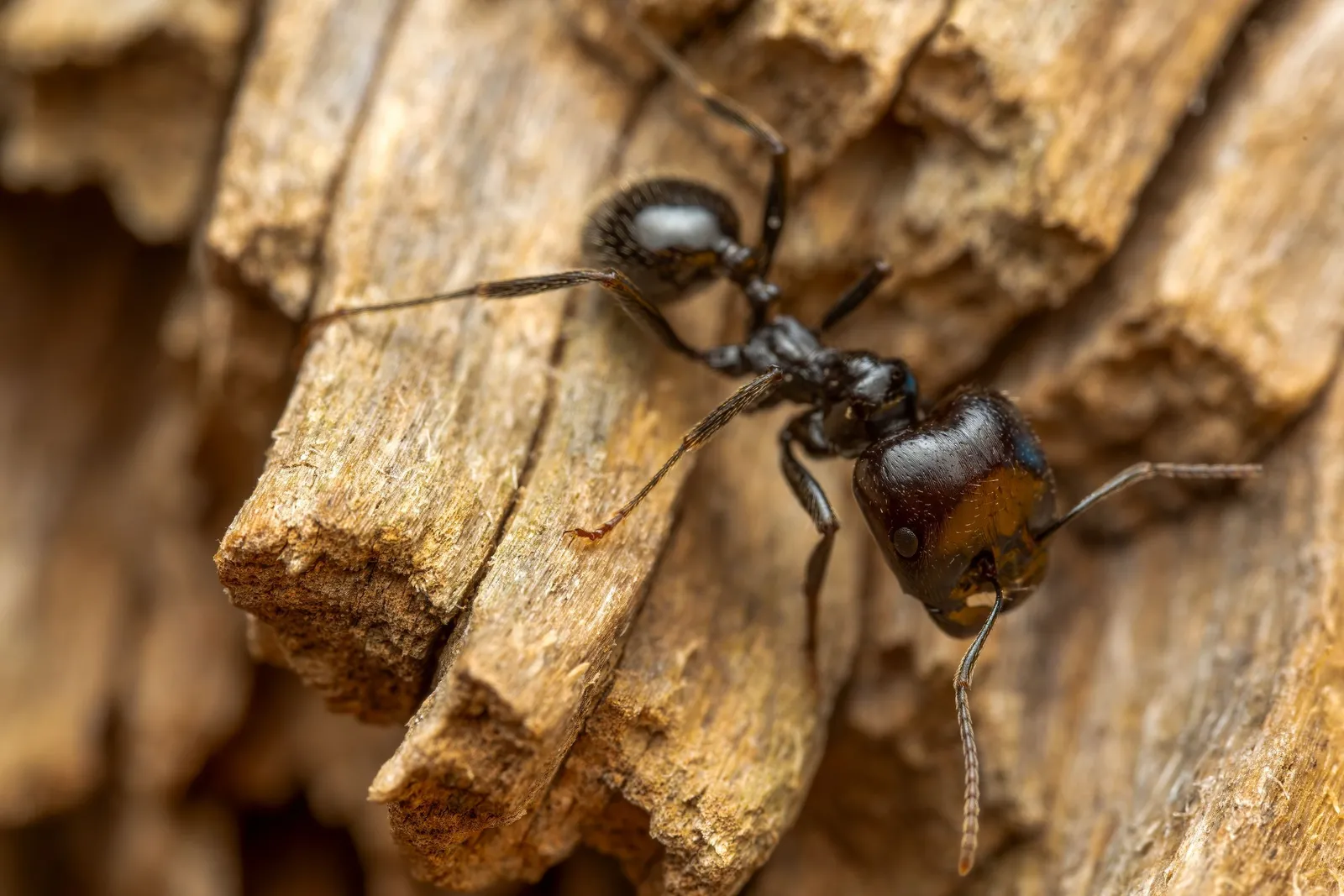
Size and color settle it most of the time. Carpenter ants run a quarter to half an inch and are black, sometimes with a rust-colored middle. Sugar ants, the odorous house ants, are about an eighth of an inch and dark brown, and they follow counters and sink edges.
A winter kitchen trail of tiny ants usually follows food and water. A trail of large black ants near wood is more worth a closer look. Photo ID is the quickest way to know which one you have.
What to Do This Week
The handbook’s advice for carpenter ants seen indoors in winter is that it is best to vacuum them up. That removes the visible ones but not the colony.
Beyond that:
- Wash the trail with soapy water to break the scent line.
- Photograph the ants and the spot where they come from.
- Look for water. A drip under a sink or a stain by a window frame is worth noting.
- Hold off on repellent sprays, which can split a colony and hide the nest.
When to Call Someone
If the ants are large, the sawdust is real, or the trail returns after a week, a photo to Sam gets you an identification and an honest read on how urgent it is. If the nest is in the structure, he treats the colony and shows you the wet wood behind it, quoted before he starts.
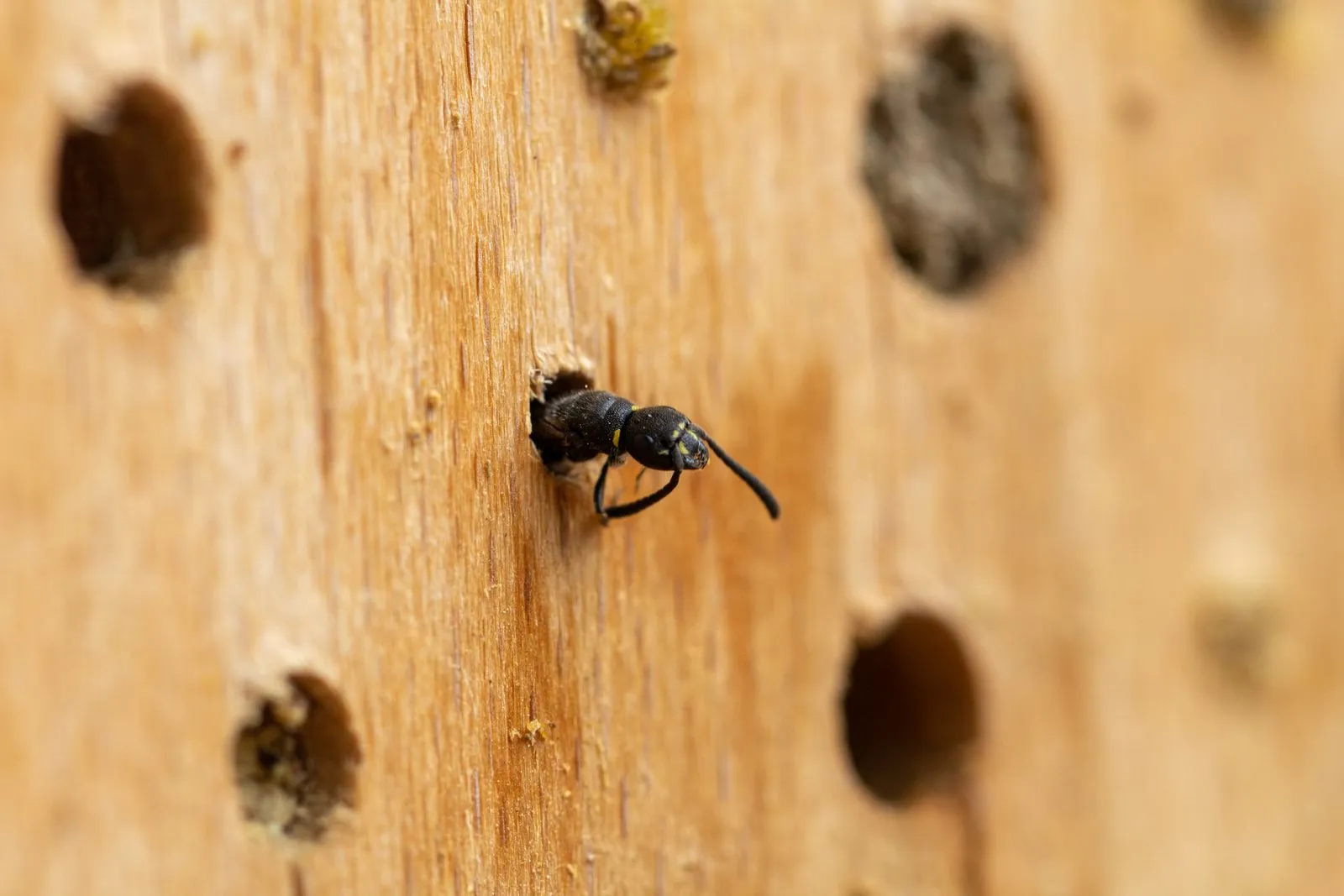
Carpenter ant work looks nothing like the holes carpenter bees leave in dry wood. Ants leave a ragged slit and shavings in damp wood, and bees drill one clean round hole in dry wood.