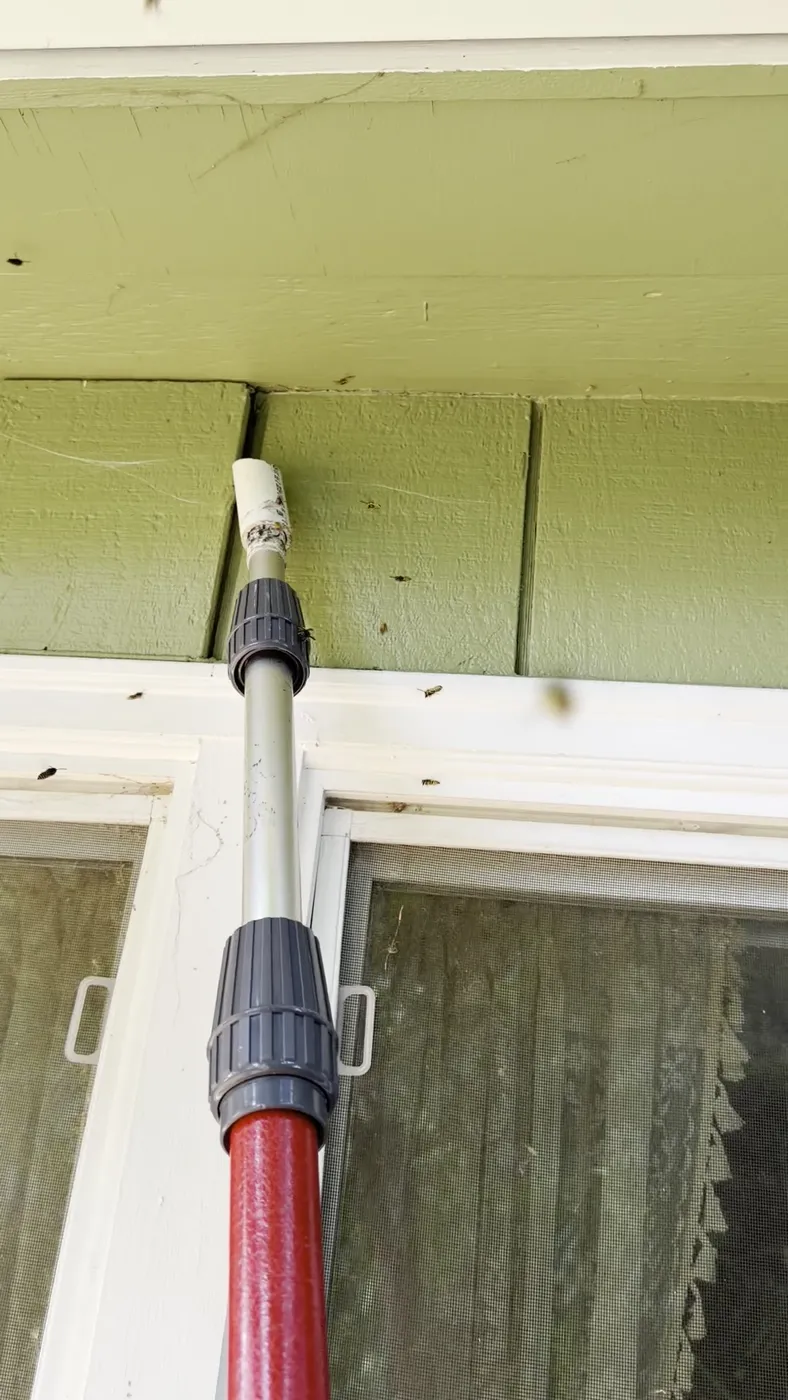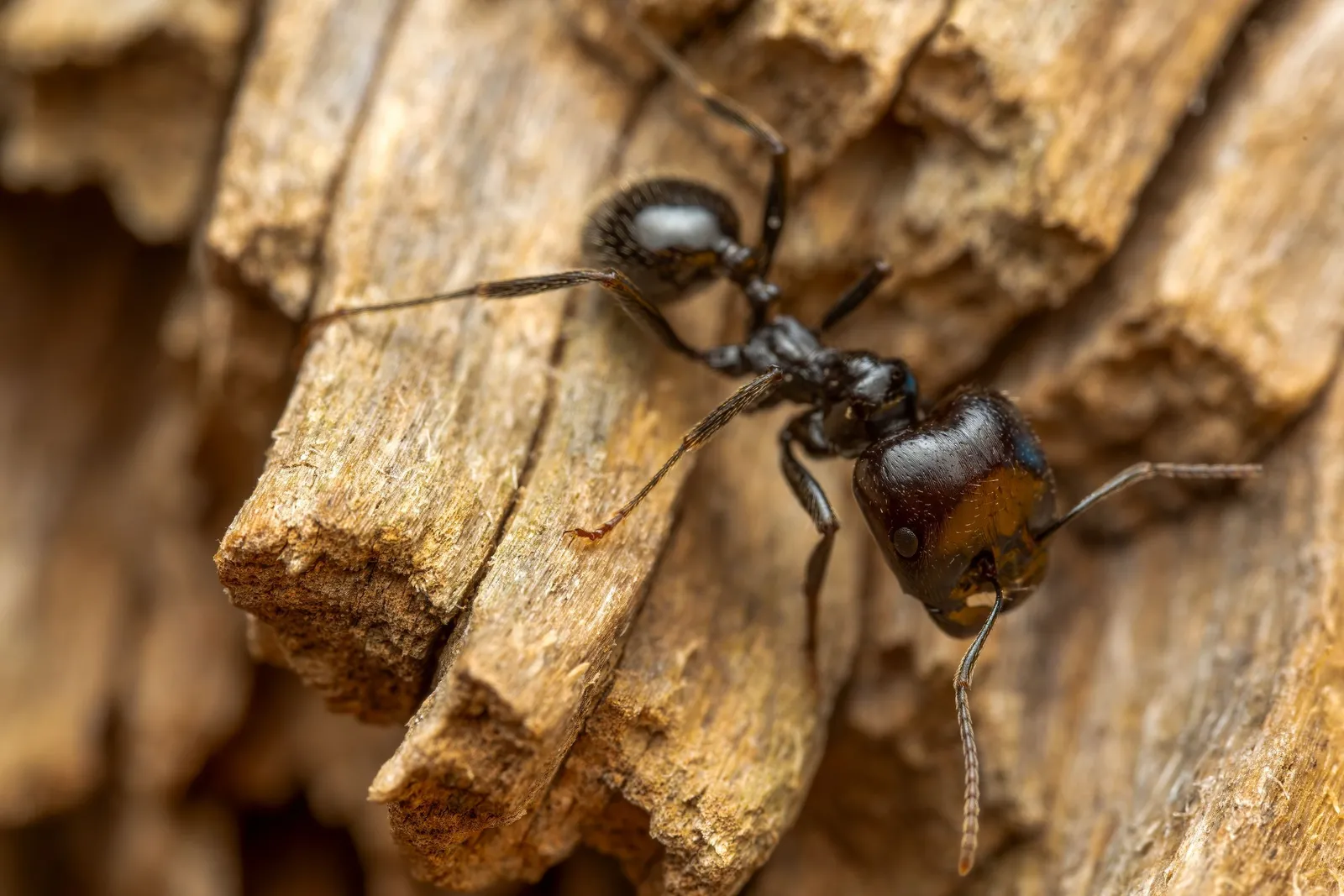
By November the carpenter bees are gone from the deck rail, and all that is left are the round holes. With the yard quiet and the weather turning, it is tempting to grab the wood filler and close every one of them.
Some of those holes are worth filling now. Others are better left alone until spring, and the reason is what is still inside the wood.
Carpenter Bees Spend the Winter in the Wood
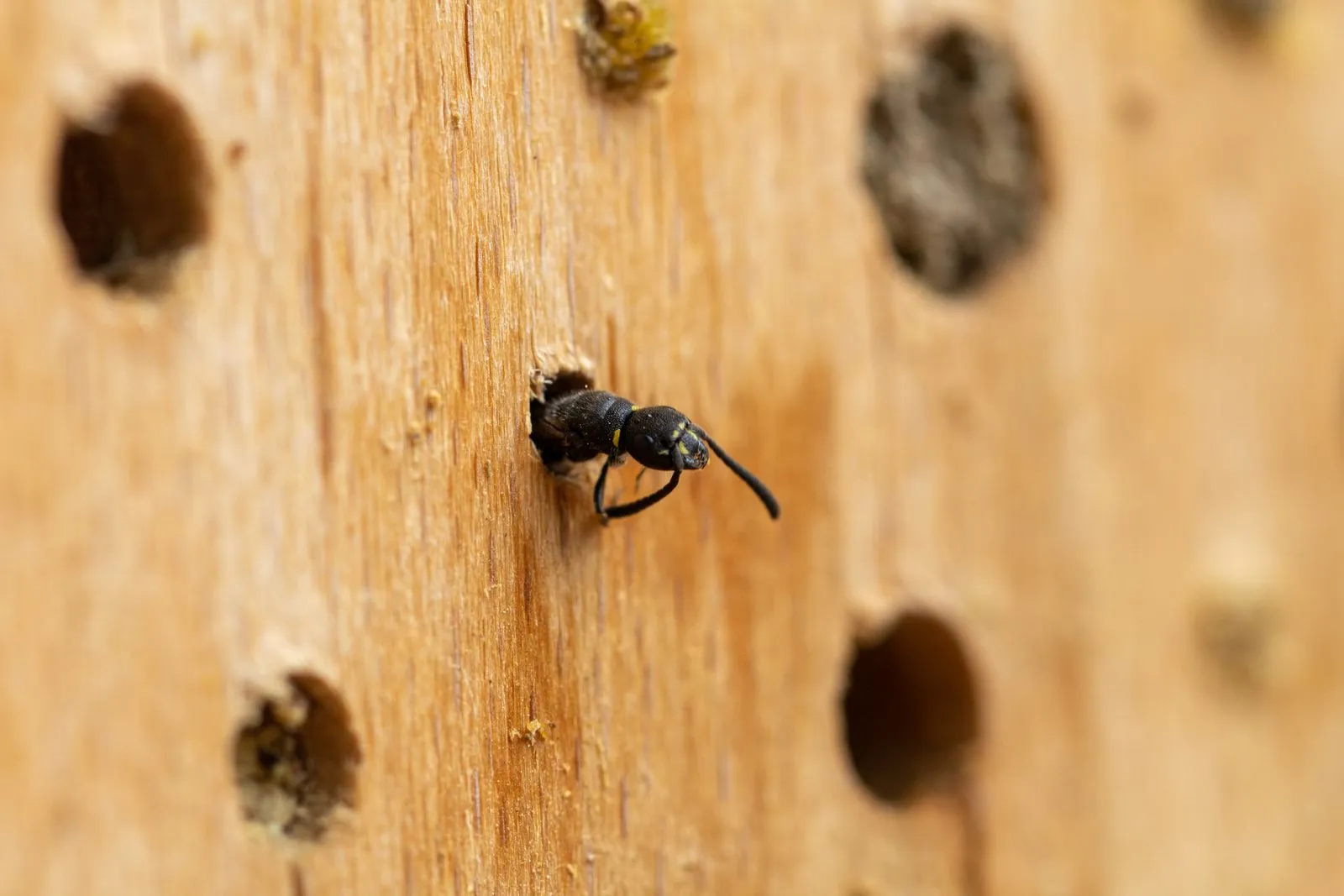
NC State Extension explains that carpenter bees overwinter as adults, often inside old nest tunnels, and come out in April and May. The quiet board on your deck may still have bees resting in it.
That matters for one reason. A hole sealed over a live bee is not a closed tunnel. The bee chews a new exit in spring, often on a side of the board you cannot see, and the tunnel gets longer, not shorter. That is the trap.
How to Tell an Old Hole From a Recent One
Carpenter bee holes are clean circles about half an inch across, usually in bare, weathered or unpainted wood. In winter there is no fresh sawdust to go by, so look at the edges and the board instead:
- Gray, weathered edges that match the rest of the board usually mean an old hole.
- Sharp, pale edges or a yellow-brown stain running down from the hole point to this year’s work.
- Ragged, torn-open holes are woodpecker damage. Birds open the tunnels to reach the larvae.
- Several holes on the same sunny board are typical. Carpenter bees reuse and extend the same wood year after year.
Take a photo of each spot now. It makes the spring check much faster, and it shows exactly where the bees are working.
What You Can Do This Winter
Winter is a good time for the parts of the job that do not involve live bees:
- Fill holes you are confident are old, the weathered ones with no sign of recent use.
- Make a list of the bare, sun-facing boards: deck rails, fascia, fence caps, the shed trim. Those are where next year’s bees will drill.
- Plan to paint or stain that bare wood in the first dry stretch of spring. Painted and stained wood is far less attractive than a weathered board. Bees want bare wood.
- Watch for woodpeckers. Once they start opening tunnels, water gets into the wood, and wet wood rots and draws more bees.
What to Leave Until Spring
Leave the recent-looking holes open for now, especially any you saw bees using this year. Treating them works best in spring, when the bees are active and moving through the entrance.
The order that holds up is treat first, wait a few days, then seal, then paint. Skipping ahead to the sealing is the most common reason carpenter bees come back to a house that was already treated. The carpenter bee removal page walks through each step.
When to Call
Most carpenter bee damage is slow, so there is rarely a reason to rush in winter. It is worth a call when:
- The holes are in wood that holds something up: deck framing, railings, fascia or window trim.
- Woodpeckers are already tearing into the tunnels.
- You are not sure whether you are looking at carpenter bees, a bumble bee nest or something else.
Text a photo of the holes, and you will get a straight answer about whether it needs attention now, in spring, or not at all. For the rest of the bee calls Sam handles around Portland, see bee control.