The gap may be tiny: a trim joint, a space near the roofline, or an opening beside a window. The insects keep using it, so closing it seems like the obvious fix. When the opening leads to active nesting inside the structure, it needs assessment before it needs caulk.
Do not seal or disturb an opening that bees or wasps are actively using. Keep people away from the flight path and contact someone who can identify the insect and work out what is behind the surface. A repair that looks simple from outside can involve more than the visible gap.
Describe traffic without trying to expose the nest
Look from an accessible position at a distance. Note which side of the house is involved and whether insects appear to be entering, leaving, or both. A wide photograph showing the window, gutter, or nearby corner can be more useful than a blurred close-up.
Oregon State University’s yellowjacket guide describes wall voids and other protected structural spaces as possible nesting sites. Repeated traffic into a hole is a reason to investigate; the size of the opening does not tell you the size or location of the nest.
Keep your observations separate from conclusions. “Insects are going behind the upstairs trim” is enough. You do not need to label it a honeybee colony or a yellowjacket nest before requesting help.
Keep the inside of the house in the conversation
Tell the inspector if you have noticed insects indoors, sounds near the same wall, or an unexplained change to the wall or ceiling surface. Do not open an access panel, remove trim, or cut drywall to investigate an active insect problem yourself.
If insects are entering a room, keep people and pets out of that area while you obtain advice. Be clear about that when you call: a suspected nest high on an exterior wall and insects entering a bedroom are different access and urgency questions.
Also report any work that has already happened. A recently sealed gap, installed light fixture, or repaired window may help establish the sequence. A professional needs the sequence even if nobody is sure whether the work and insect activity are connected.
Identification changes the plan
Honeybees and yellowjackets should not automatically receive the same approach. Sam The Bee Man offers honeybee removal and relocation as well as yellowjacket removal. The right conversation starts with identifying what is there.
Ask how identification will be made, what access may be needed, and whether any opening of the structure is expected. If work will affect siding or interior finishes, ask who handles that work and who is responsible for the repair afterward.
Avoid assuming that “nest removal” includes every construction task required to restore a wall. It is better to clarify the scope before an appointment than to discover afterward that the pest work and building repair were separate jobs.
Put repair work in the correct order
Tell a siding contractor, painter, or roofer about the activity before they start near it. Ask the pest professional to explain when the opening can be repaired and how that determination will be made. The point is to coordinate the work, not to leave the house with a permanent gap.
For a rental or shared building, notify the property manager and identify the affected unit or exterior location. Keep everyone working from the same photographs and notes. Separate messages saying “bees outside” and “please seal the trim” can accidentally send two contractors toward conflicting tasks.
If you already used a spray, provide the product name, application location, and date. Do not add another product while waiting for a reply unless the professional has discussed that step with you and it follows the product directions.
Get a location-specific assessment
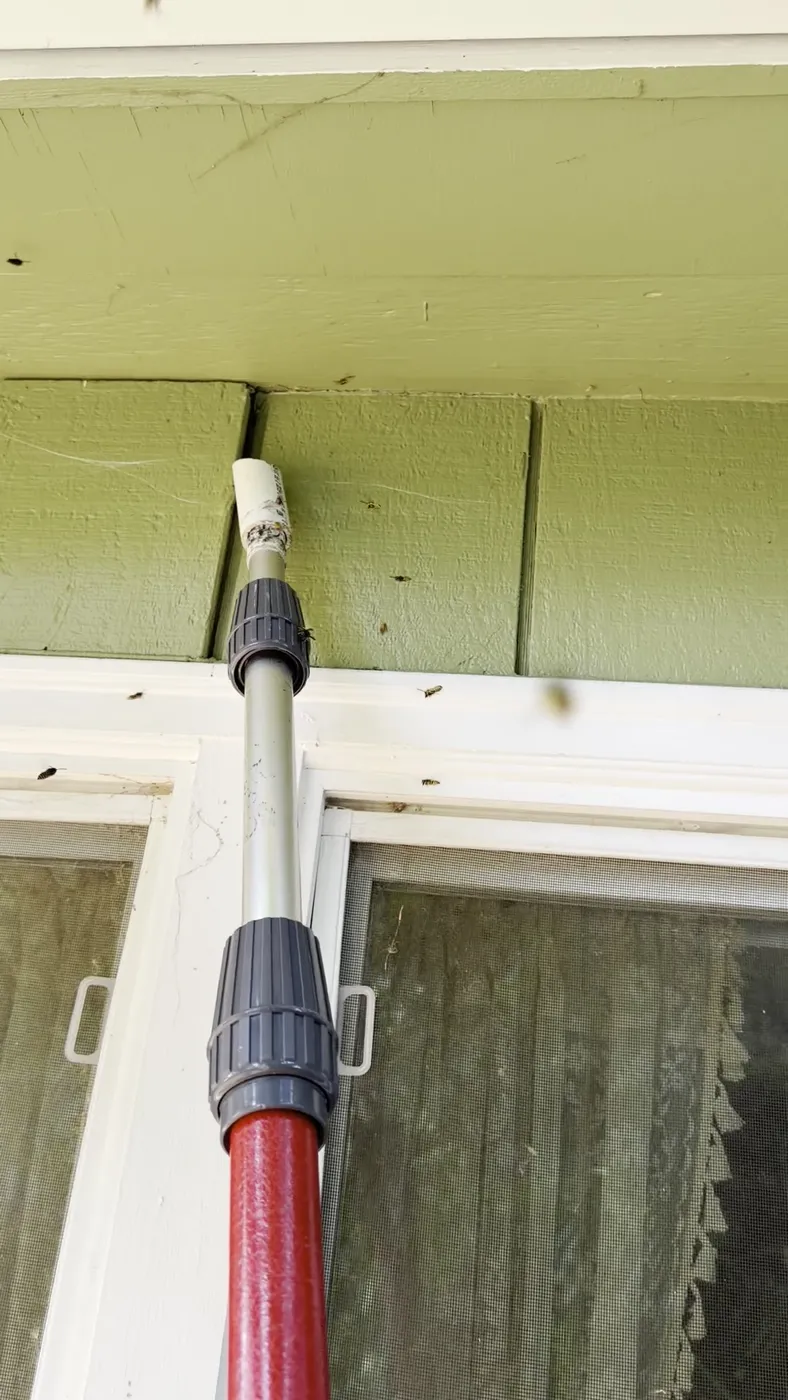
Our Milwaukie yellowjacket job shows a real example of activity around a window area. It is an example of the work, not a prediction of what will be required for your house.
Sam The Bee Man serves West Linn and the Portland-area communities on our service map. Send a message about the opening you have noticed, including whether insects are getting indoors. We can discuss identification, access, and next steps before someone starts sealing or dismantling the area.