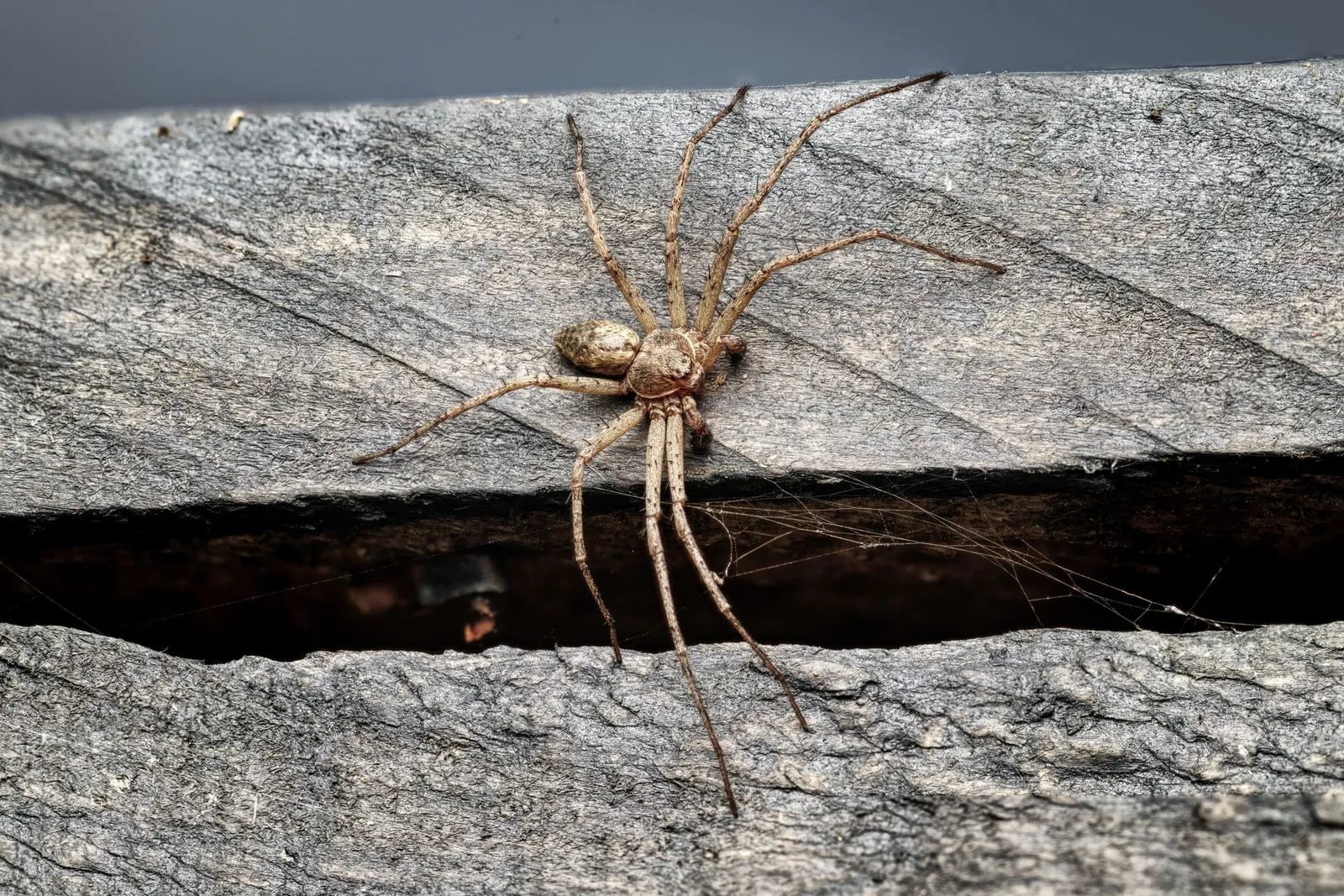
A big brown spider moving fast across the living room floor at ten at night gets a reaction. In Portland, from late summer into fall, that spider is very often a giant house spider.
Most of the time it is a single wanderer, not the start of a problem. Knowing why it is out helps you decide whether to do anything.
Why a Giant House Spider Shows Up Indoors in Fall
Washington State University’s pest guide says the giant house spider is often seen from mid-summer to early fall, when males in particular are highly mobile. Indoors, they are usually found on floors, or trapped in sinks and tubs while searching for water.
That explains the pattern. The wanderers are mostly males, and a house is a convenient place for one to end up.
Is a Giant House Spider Dangerous?
WSU states that the bite of the giant house spider is not known to pose any threat to humans. If you are ever bitten, the guide suggests bringing the spider to an expert for identification and seeing a doctor if you are concerned.
Sam is a licensed Commercial Pesticide Operator, not a medical professional, so a bite that looks wrong is a question for a doctor.
Is It a Giant House Spider or a Hobo Spider?
People in the Northwest often assume any large brown spider is a hobo spider. WSU says color, size and markings are not reliable features for identifying this spider, and that males are often confused with hobo spiders.
The Burke Museum in Seattle goes further and explains that you cannot recognize a hobo spider without a microscope. At home, the useful fact is that the giant house spider bite is not known to threaten people.
What Helps Indoors
WSU’s guidance for indoors is that control measures are best limited to mechanical means if you do not want to tolerate them. In practice:
- Cup and card it out the door. Most of these spiders will do fine outside.
- Vacuum webs and egg sacs, then empty the canister outdoors.
- Put sticky traps in the dark corners of the garage or basement where spiders travel.
- Close gaps around doors, vents and pipes, and check firewood before it comes inside.
One spider in the bathtub is one spider. Nobody needs to be called over it.
What Does Not Work Outdoors
The same WSU page says that outdoor control of spiders, chemically or otherwise, is neither recommended nor realistic. Spraying the wall does not keep a wandering male out.
That fits how spider control in Portland works with Sam. He does not chase spiders with a sprayer. He treats the insects the spiders feed on around the foundation and eaves, takes down webs and egg sacs, and closes the gaps they come through.
When It Is Worth a Call
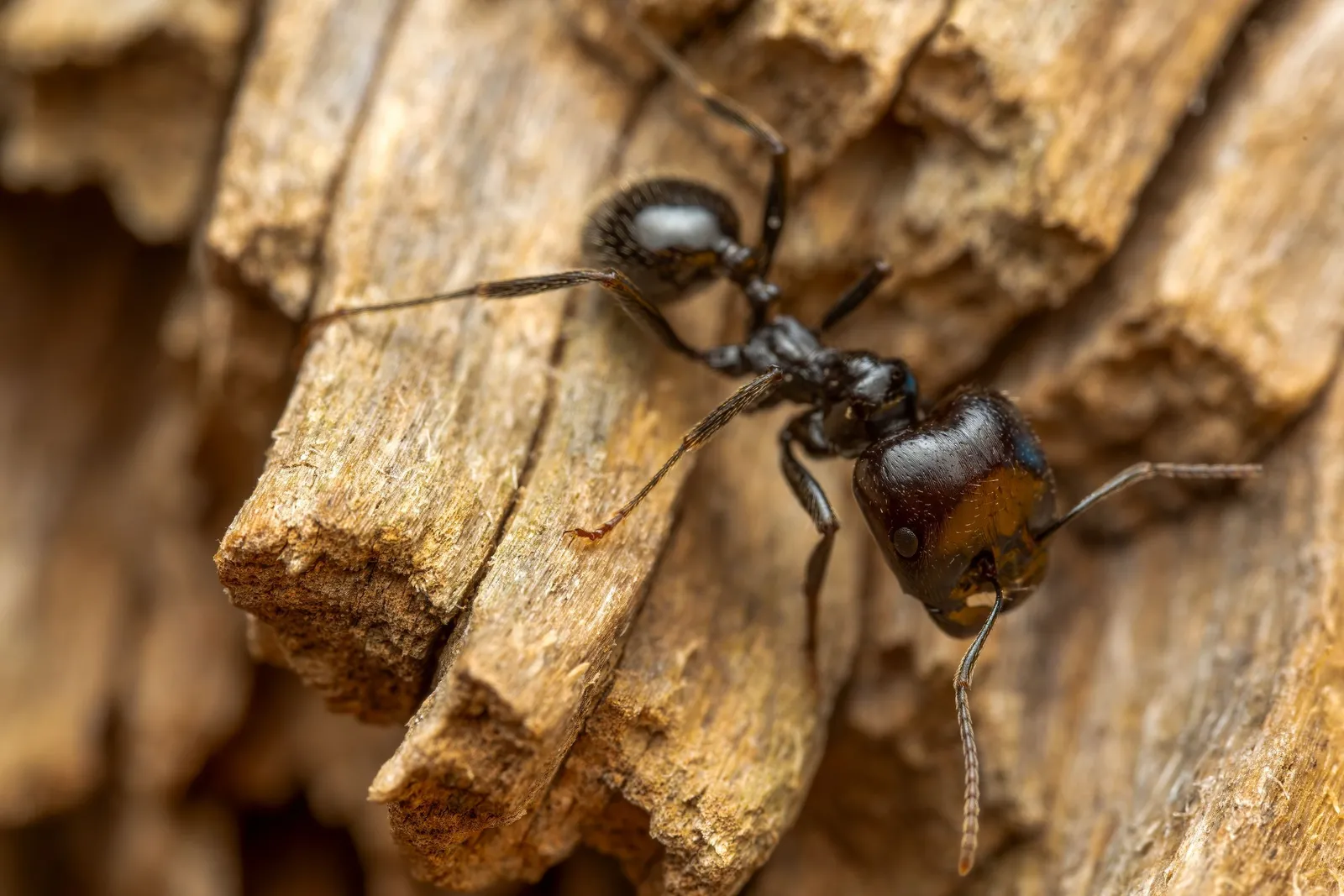
A few spiders in fall is normal. Webs across every window, egg sacs gathering in the garage, or new spiders every week point to a food supply worth looking at. That is a job for the insects feeding them, often ants and small flies.
A photo texted to Sam gets you an identification, and it is free.
Not every spider eater is a spider, either. Mud dauber wasps stock their nests with them.