
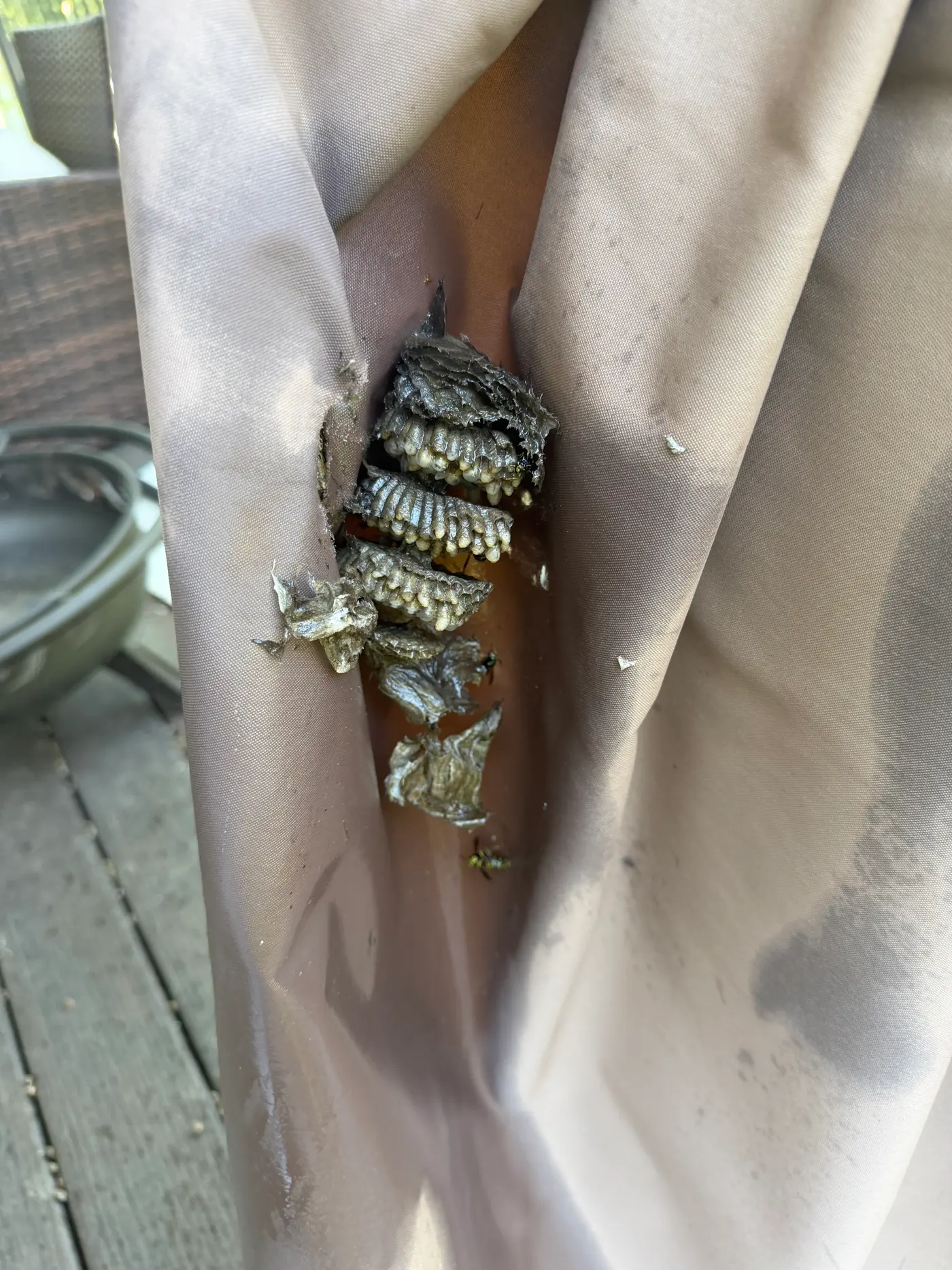
You reach for the patio umbrella crank and see a wasp disappear into the folds. Stop there. Folding the umbrella, shaking the fabric, or carrying it into the garage can disturb whatever is using that sheltered space.
The same caution applies when you move a stack of chairs, open an outdoor storage box, or pull a cover from furniture that has been sitting undisturbed. Start by observing the area before turning fall cleanup into a close encounter with an active nest.
Check before you handle stored items
Walk through the patio area from a comfortable distance. Watch the umbrella, furniture undersides, and sheltered storage locations for repeated insect traffic. Do not reach under an object or unfold it to improve your view.
If you see insects repeatedly using the same spot, leave the item where it is. Keep children and pets away, and tell anyone helping with cleanup which object should stay undisturbed. Take a photograph from where you are already standing if the view permits it.
A single insect resting on fabric does not establish a nest. Repeated movement into a protected space is more useful information. If you cannot tell what is happening without handling the item, ask for help rather than testing it by movement.
Why the nest shape matters
Oregon State University distinguishes paper wasps with exposed cells in their nests from yellowjackets using enclosed or hidden nesting spaces. Paper wasps are often less defensive, but an active nest on something you must move still deserves caution.
Do not assume that every nest under a patio object is the same species. A photograph of a visible nest can help with identification; there is no need to turn it over or remove a cover for a better picture.
Sam The Bee Man provides paper wasp control and other wasp removal services. The insect, nest position, and access all affect what a service visit involves.
Divide the cleanup into work you can do now and work that waits
Move your cleanup supplies and other activity away from the suspect item. You can work on an unrelated part of the yard while the nest area stays undisturbed, provided you are not crossing the flight path to reach it.
Make one person responsible for communicating the pause. If several family members are putting things away, a verbal warning to one person can be missed by the next. The same goes for a landscaping crew arriving later in the week.
Do not wrap the umbrella to contain the insects, carry it through the house, or put it into a vehicle. Keeping the location stable helps the person assessing it understand the access and avoids moving the problem into an enclosed space.
What to ask before an appointment
Describe the item and where it sits. Is the umbrella on a ground-level patio or an upstairs balcony? Can the area be reached without passing through a living room? Are there other people, pets, or neighboring patios close by?
Ask whether the item should remain exactly as it is until the visit, what access the technician needs, and what follow-up instructions you will receive before using or storing it. If you have already sprayed the object, identify the product and when it was applied.
An assessment is also an opportunity to discuss whether any treatment is needed at all. A confirmed inactive nest and an active nest beside a seat are different situations. Avoid deciding that it is inactive because you did not see insects during one quick look.
Store the item after the activity is resolved
Once the professional has explained when the area can be handled, complete the storage task in daylight with a clear view of what you are moving. Follow any product-specific instructions for handling or cleaning. Check the storage destination before you fill it, too, so you do not block a problem that needs attention later.
Keep a note of where the nest was attached. When you bring the furniture out again, that is a sensible place to inspect first. It does not mean another colony is inevitable; it simply makes your next inspection more deliberate.
For patios in West Linn and the Portland metro area, contact Sam The Bee Man with a safe-distance photo and a description of the object. You can finish the seasonal cleanup once you know what is there and how to handle the area.