
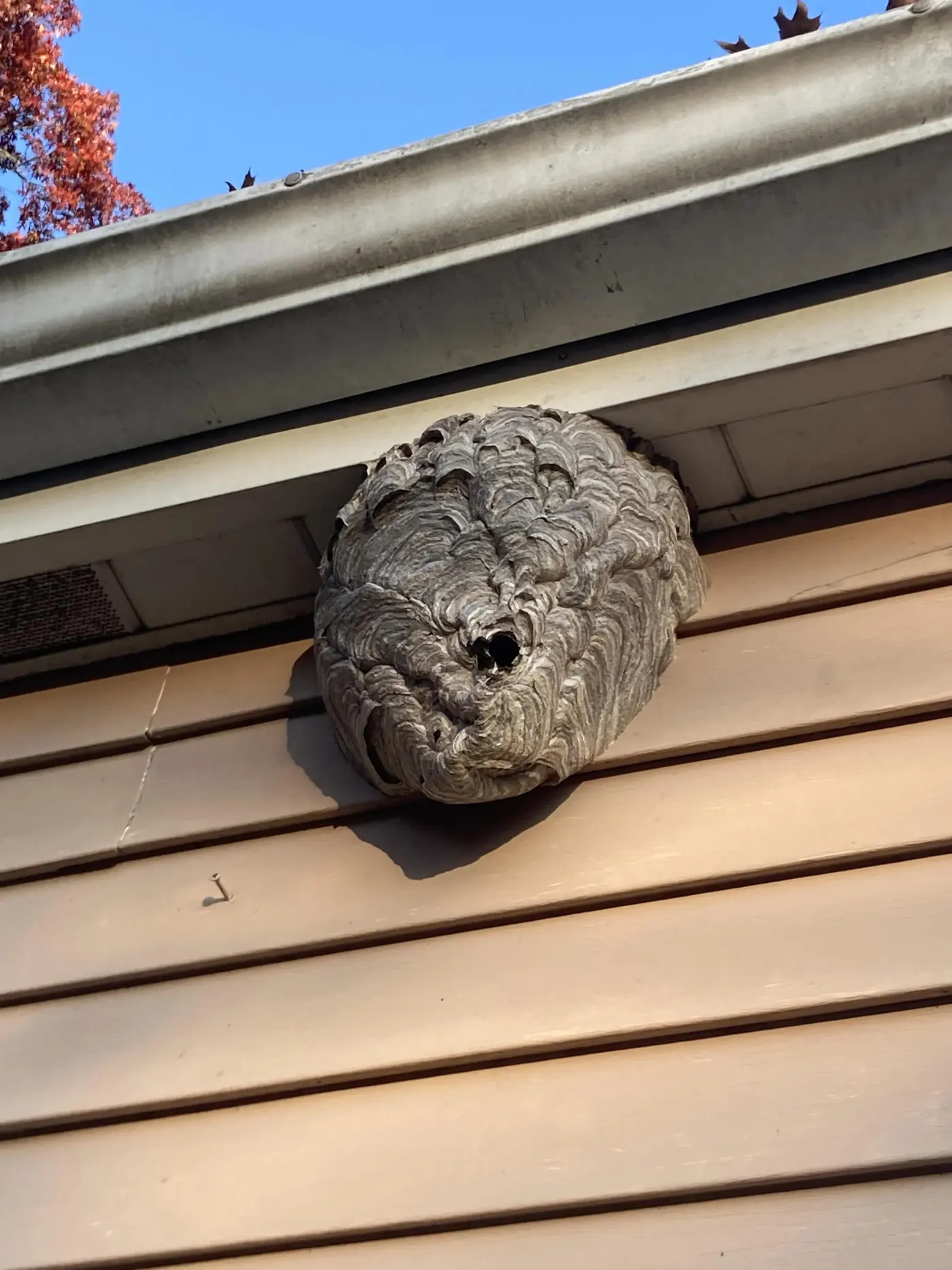
Leaves are coming down, the patio is quieter, and the nest under the eave seems empty. It is tempting to knock it down while the ladder is already out. A quiet moment is not enough information to make that decision.
Before touching a nest, establish what built it and whether it is still active. The answer affects whether to leave it alone, arrange service, or coordinate removal with another maintenance task. Autumn is useful context, not a substitute for identification.
A calendar date is not an activity check
Oregon State University Extension explains that many Oregon yellowjacket colonies die after a hard freeze, with newly mated queens overwintering elsewhere. That does not mean every nest is inactive by the end of September.
Do not use a cold morning, one empty-looking entrance, or a lack of buzzing as your sole test. Describe when you watched, what you could see, and whether insects have been present on other days. If the nest is high or hidden, say so; you are not expected to climb up for an inspection.
The practical question is whether someone needs to work in that space now. If a nest can remain undisturbed while you seek advice, there is no advantage to handling it first.
Identify the structure before calling it a wasp nest
A paper enclosure hanging under an eave, exposed paper cells, and wax comb behind siding are not interchangeable clues. A photograph of the visible structure can help determine the next step, but leave covers, trim, and wall materials in place.
If honeybees may be involved, discuss honeybee removal and relocation. Do not apply the same seasonal assumption to a honeybee colony that you would to an annual yellowjacket nest.
If you only see insects using a wall opening, there may be no visible nest to photograph. Provide a wide shot of the location and describe the traffic. The inspector can decide what additional information is needed without asking you to expose the colony yourself.
Match the decision to how the space is used
A nest over the front steps may interfere with daily access. One far from walkways may be easier to leave undisturbed. Tell the professional which doors, paths, and work areas are affected so the advice reflects the property rather than nest appearance alone.
Think about upcoming work too. Gutter cleaning, pruning, painting, and siding repairs can bring someone close to a location the household normally avoids. Tell the contractor before the scheduled visit instead of assuming they will notice it from the ground.
For a shared building, give the property manager the same location description you provide to the pest professional. Include a photo showing the whole exterior section. That reduces the chance of one person discussing the rear eave while another arranges work at the front entrance.
Ask what “resolved” means for the job
Before service, clarify whether the work involves treating activity, physically removing a nest, accessing a hidden space, or some combination. Ask what evidence will be used to decide when the area can be handled and when any building opening should be repaired.
Do not assume that an old nest must be removed for every situation or that physical removal alone resolves every active problem. Those decisions depend on identification, access, and the location. The wasp, hornet, and yellowjacket service overview explains the range of work Sam handles.
If another contractor is repairing the area afterward, ask who will communicate the go-ahead. A written note about timing and scope is easier to follow than a message passed through several people.
Make the spring inspection easier
After the issue is assessed and any agreed work is complete, keep a photo of the location. Add it to your seasonal maintenance notes with any repair recommendations. Next spring, you can look at the same sheltered areas from accessible ground without relying on memory.
Avoid promising yourself that one removal means you will never see another wasp nearby. The useful result is a known condition at a specific location, clear next steps, and fewer surprises when someone needs to work there.
Sam The Bee Man serves West Linn and the Portland metro area. If you are unsure whether a nest is abandoned, send us the location and what you have observed. Leave it undisturbed while you get a plan for the insect and the space involved.